
Mice · Durham, NC
Mouse Control Durham NC: Mice in the Walls, Pantry and Garage
The first cool nights of fall send house mice looking for warmth, and Durham homes give them plenty of ways in. Good mouse control in Durham finds the quarter-inch gaps they use, removes the mice already inside and seals the house so the next wave stays out.
- Kitchens and pantries
- Walls and ceilings
- Garages and storage
Your call connects you with an independent local pest control provider.
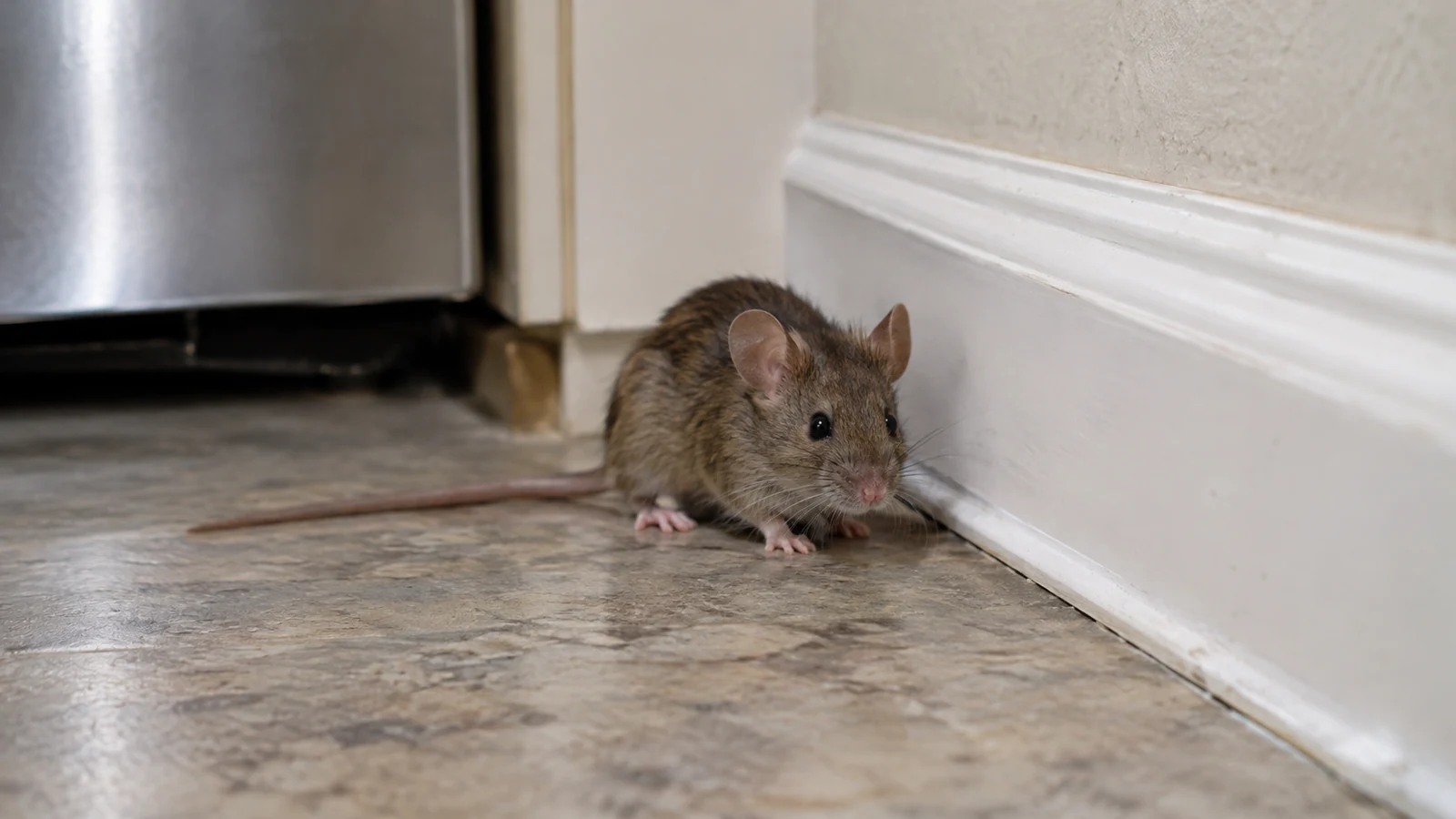
Why Mice Move Into Durham Homes in the Fall
House mice live outdoors all summer in tall grass, wood piles, shrub beds and the edges of wooded lots. In Durham, the shift usually starts in October. Overnight lows drop into the 40s, the first frost tends to arrive in late October or early November, and mice start following warm air leaking out of foundations, garage doors and siding.
Durham is a good place to be a mouse in winter. The tree canopy over neighborhoods like Trinity Park, Duke Park and Hope Valley drops acorns and seeds all fall. New subdivisions in South Durham and around Southpoint back onto fields and wooded buffers. Older houses near downtown have decades of small gaps in siding and trim. And the climate is mild enough that a mouse family in a warm wall void can keep breeding straight through winter.
A mouse problem is not a cleanliness problem. Spotless kitchens get mice too. They come for shelter first and then find whatever food is within reach, often crumbs under the stove, pet food, or the bag of birdseed in the garage.
Signs You Have House Mice and Not Rats
Small, pointed droppings
About a quarter inch long, dark and rice-shaped with pointed ends. A single mouse can leave dozens a night, scattered along cabinet edges, in drawers and behind appliances.
Light scratching
Quick, light skittering in walls or the ceiling, usually in the evening and before dawn. Heavier thumping and gnawing points more toward rats.
Chewed packaging
Small, neat holes in cereal boxes, pasta bags and pet food sacks, often with shredded paper nearby.
Nests
Balls of shredded paper, fabric, insulation or dryer lint tucked into drawers, behind the dishwasher, in stored boxes or inside the garage wall.
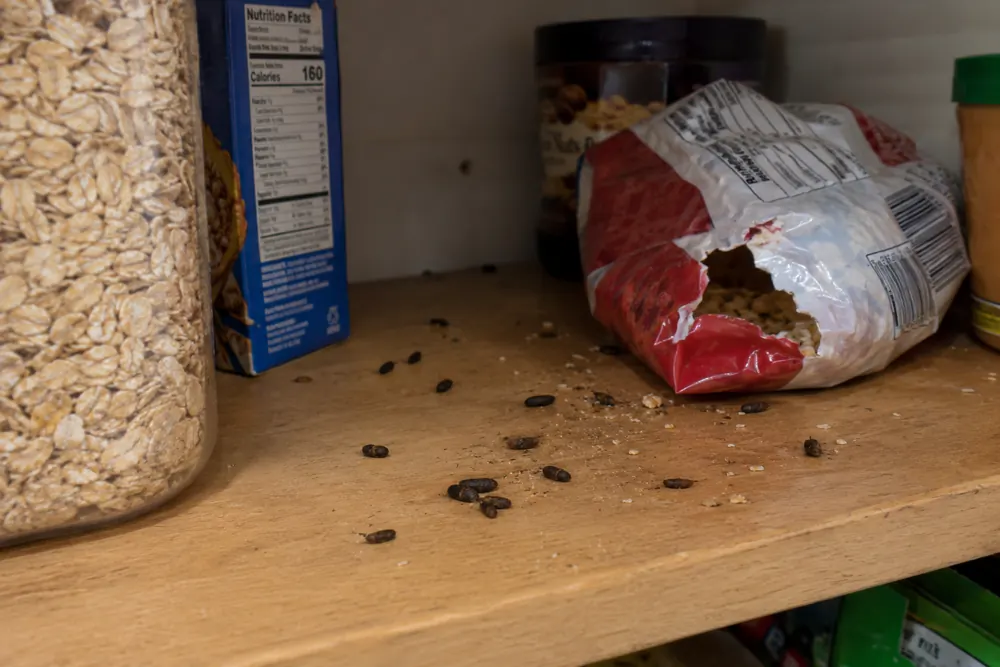
A house mouse rarely travels more than 10 to 25 feet from its nest. If droppings keep turning up in one kitchen cabinet, the nest is probably very close, often in the wall behind it or under the cabinet base.
Where Mice Get Into Durham Houses
An adult house mouse can squeeze through a gap about a quarter inch wide, roughly the width of a pencil. These are the most common openings in local houses.
Garage doors
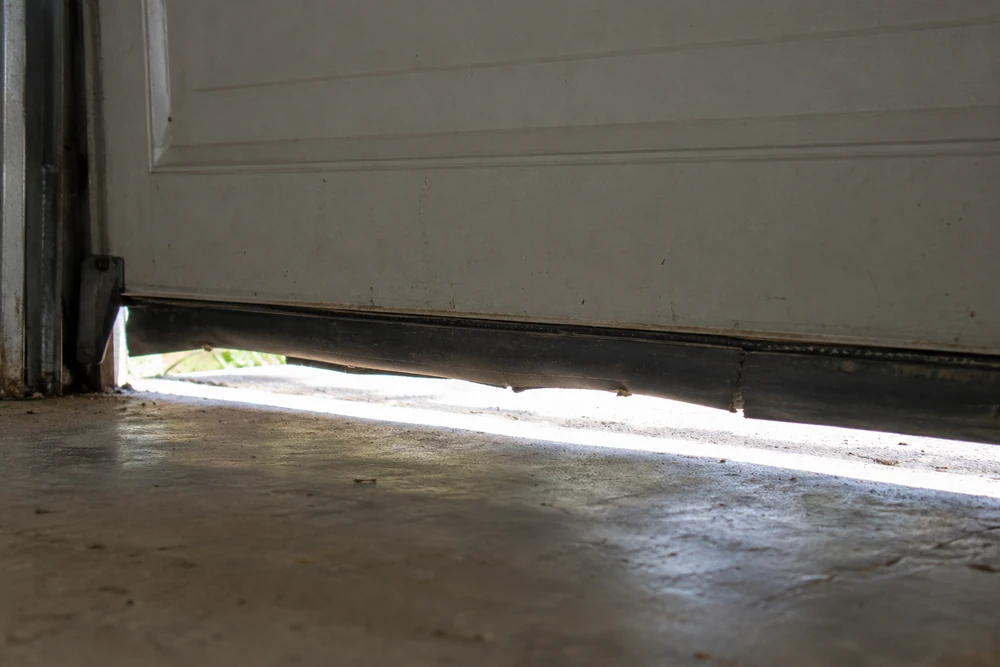
The rubber seal along the bottom of a garage door wears out, cracks or never sat flush against an uneven slab. Mice walk right in, nest in stored boxes, then follow the wiring and plumbing into the house. Attached garages are one of the most common sources of mice in South Durham subdivisions.
Weep holes in brick veneer
Many newer brick-faced homes have small vertical gaps in the bottom row of brick that let moisture drain. Mice use them as doorways into the wall cavity. They can be fitted with stainless steel weep screens without blocking drainage.
Utility lines and HVAC line sets
Where the AC line set, dryer vent, gas line or cable enters the house, the hole is often larger than the pipe. Builders fill it with foam or caulk that mice chew through in a night.
Older siding and trim
In Old West Durham, Walltown and East Durham, wooden siding, corner boards and window trim on century-old houses have shrunk and separated over the years. Each of those seams is a possible entry.
Crawl spaces and attics
Mice climb well. A loose crawl space vent or a gap at the roof return gets them into the structure, and from there they travel the wall cavities freely. Our page on mice in the attic and crawl space covers that side of the problem.
Mouse Control Durham NC: How a Provider Handles It
Inspection
The provider checks the kitchen, pantry, laundry room, garage and any place you have seen droppings, then walks the outside looking at the garage door seal, weep holes, utility entries, siding and the roofline.
Trap placement based on how mice move
Because mice stay so close to the nest, traps go where activity is heaviest: along walls, behind appliances, inside lower cabinets and in the garage. Many traps placed close together catch far more than a few traps spread around the house.
Sealing entry points
Gaps are closed with copper or stainless mesh, sealant, door sweeps, garage door seals and weep screens. Sealing usually happens on the first or second visit so new mice stop arriving while trapping removes the ones inside.
Follow-up and confirmation
Return visits check and reset traps until there are no new catches and no new droppings. For a typical home, that is often two to three weeks.
If mice keep coming back after past treatments, the openings were never found or the materials used were too soft. The mouse-proofing your house page explains what holds up.
Mouse Control Around Kids and Pets
Many Durham callers have young children, dogs or cats, and the first question is usually about poison. Here is what to ask and expect.
- Trapping first inside the home. Snap traps inside tamper-resistant boxes keep fingers and paws out while still catching mice.
- No loose bait indoors. Any rodenticide used should be in a locked station placed outside or in areas pets and children cannot reach. Ask exactly where each station goes.
- Skip glue boards. They catch pets and wildlife, cause slow deaths, and stressed mice can leave urine and droppings across the board.
- Clean up carefully. Mouse droppings and urine can carry bacteria and are a known allergy and asthma trigger for children. Wet-clean rather than sweep. Our cleaning up after mice page has the safe method.
Your call connects you with an independent local pest control provider.
Why Mice Keep Coming Back After DIY Traps
Catching a few mice is easy. Ending the problem is harder, for a few predictable reasons.
- The numbers add up fast. House mice can have five to ten litters a year, often five or six pups each, and young mice can breed within about two months.
- Traps in the wrong place. A trap in the middle of the kitchen floor rarely catches anything. Mice run along edges, so traps need to sit flush against walls and in the dark spaces behind appliances.
- Too few traps. Two or three traps for an established population means weeks of catching one mouse at a time while others keep breeding.
- Repellents instead of sealing. Peppermint oil, dryer sheets and ultrasonic plug-ins do not stop a mouse looking for shelter. Our article on whether rodent repellents work goes through the evidence.
- Nobody closed the gaps. As long as the garage seal or the line-set hole is open, the house keeps getting new mice from outside.
If you want to try on your own first, our guide on how to get rid of mice in your house walks through the method step by step, including when it is time to call.
What You Can Do This Week to Make the House Less Inviting
Professional mouse control works faster when the house stops feeding and sheltering the mice. These steps cost little and help right away.
- Move food into hard containers. Cereal, rice, flour, pet food and birdseed go into glass, metal or thick plastic with tight lids. Paper and thin plastic bags are an open invitation.
- Get garage storage off the floor. Cardboard boxes stacked against garage walls are ideal nesting spots. Plastic bins on metal shelving, with a clear gap along the wall, take that away and make droppings easy to spot.
- Clear the dark corners. Pull the stove and refrigerator out once, vacuum the crumbs behind them with a HEPA vacuum only after wet-cleaning any droppings, and check the gap where the dishwasher meets the cabinets.
- Close the obvious gaps. Stuff copper mesh into visible holes around pipes under sinks and behind the washer. It is a temporary fix, but it slows new arrivals.
- Look at the garage door. If you can see daylight under it, the seal needs replacing. That one fix stops a surprising number of fall mouse problems in Durham.
- Keep the exterior tidy. Firewood belongs on a rack away from the house, and shrubs and ivy should be trimmed back from siding so the foundation is visible.
None of these steps removes the mice already living in your walls, but together they cut off food and new arrivals, which makes trapping work much faster.
Mice in Apartments, Rentals and Businesses
Apartments and townhomes
Mice travel between units through shared walls, plumbing chases and attics. Treating one unit helps that tenant for a while, but lasting mouse control in multi-unit buildings means treating connected units and sealing the shared pathways. If you rent, report the problem to your landlord in writing.
Student rentals near Duke and NCCU
Older houses converted to rentals near campus often have years of small gaps and frequent turnover, with food stored in bags and boxes. Mice notice quickly. Sealing at the start of the fall semester is far easier than chasing an infestation in December.
Offices, shops and restaurants
Mice in a business show up first in break rooms, storage areas and behind equipment. Food businesses face inspection points for any rodent evidence. Our commercial rodent control page covers ongoing monitoring.
Durham Mouse Control Questions
What month are mice most active in Durham?
Indoor activity climbs in October and November as nights cool and stays high through February. Mice are around year-round, but most calls about mice in walls and kitchens come in the colder months.
If I see one mouse, how many are there?
Usually more than one. Mice are mostly nocturnal and avoid open spaces, so a mouse you see in daylight often means a larger group or a crowded nest. Our article on the 5-day mouse rule explains what one sighting can and cannot tell you.
How long do mice stay in a house?
As long as they have shelter and food. A mouse family will not leave on its own once it is nesting in a wall or under a cabinet. Removing them and sealing the entry points is what ends it.
What gets rid of mice the fastest?
Many snap traps placed along walls in the active area, plus sealing the entry points at the same time. That combination usually clears a typical house in a few weeks.
Are mice dangerous to have in the house?
House mice contaminate food and surfaces with droppings and urine, which can carry bacteria such as Salmonella, and mouse allergens can worsen asthma. They also chew wiring. The hantavirus most people worry about is carried mainly by deer mice, not house mice, and North Carolina has recorded only one case (NCDHHS).
Related Rodent Services in Durham
Rodent Exclusion
Garage seals, weep screens and utility gaps closed with chew-proof materials.
Sealing details →Rodent Cleanup
Safe removal of droppings, nests and soiled insulation after mice.
Cleanup and sanitation →Rat Removal
If the droppings are bigger and the noises heavier, it may be rats.
Rats in Durham homes →This site is a referral service. Calls are connected with independent rodent control providers serving Durham, NC. See how it works.
Your call connects you with an independent local pest control provider.