Coverage
Areas We Serve in Durham County and Nearby Towns
Rodent problems look different in a mill house in Old West Durham than in a townhome near Southpoint or a farmhouse in Bahama. This page walks through the areas we serve, grouped by part of town, with what rodent issues tend to come up in each.
- City of Durham
- Northern Durham County
- Orange, Wake and Granville towns
Your call connects you with an independent local pest control provider.
How Coverage Works in the Areas We Serve
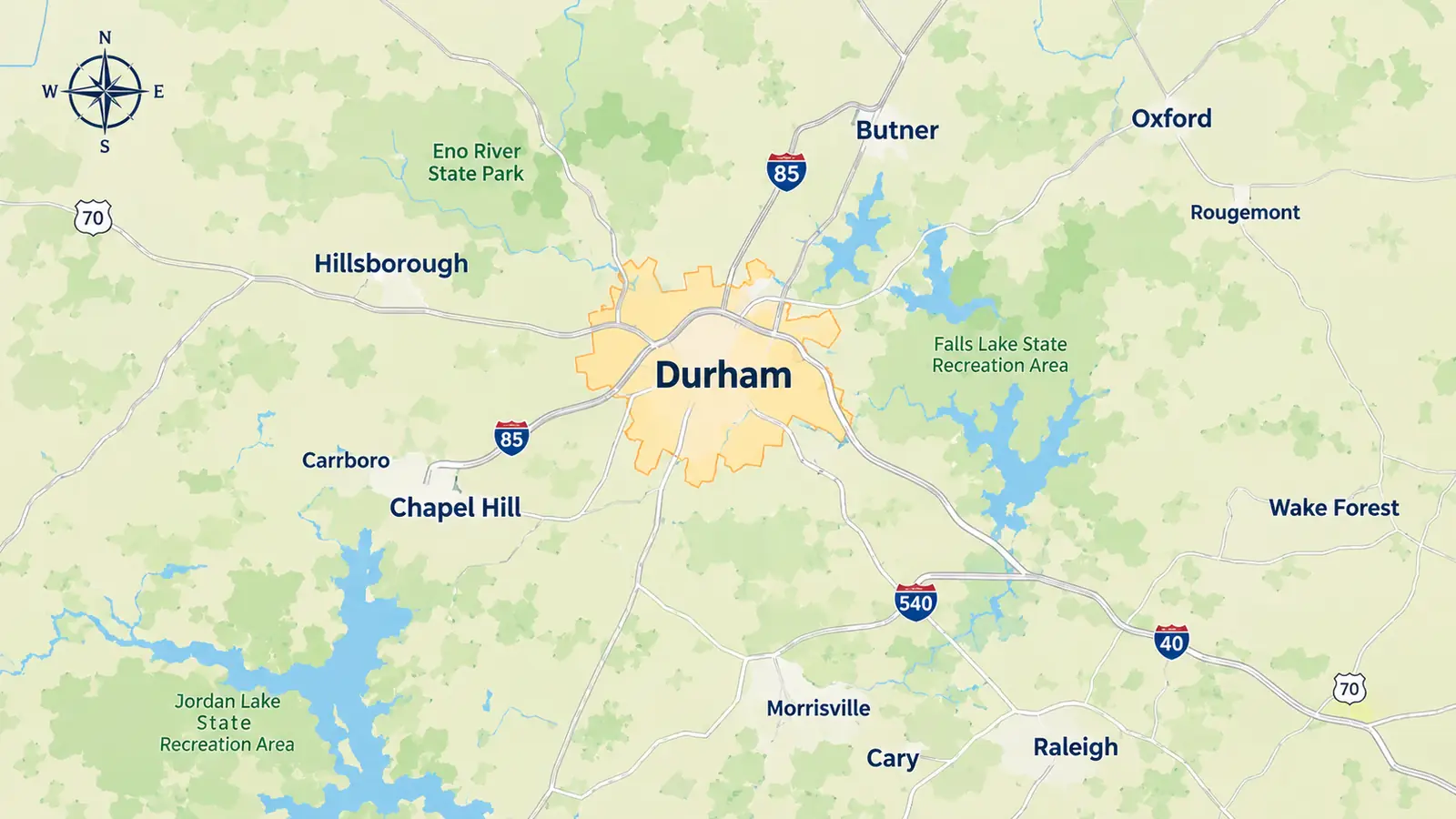
We connect callers with independent rodent control providers who serve the Durham area. Each provider covers its own set of ZIP codes, so when you call, mention your address. That makes sure you reach someone who actually works in your neighborhood, and it saves you a call that cannot be completed. ZIP codes below are approximate guides to each area, since many Durham neighborhoods straddle more than one.
If you are not sure which area you fall into, do not worry about it. The groupings on this page are a guide to the kinds of rodent problems common in each part of town, not a requirement for calling. A house on the edge of two areas can share traits of both, and the provider you speak with will ask about your specific home.
Downtown and Central Durham
Mostly ZIP 27701. Downtown, the American Tobacco Campus, Brightleaf, Central Park, Cleveland-Holloway and the blocks around Durham Athletic Park.
Older brick commercial buildings, converted warehouses and lofts sit beside restaurants and bars, and new towers keep going up. Construction displaces rats, and dumpster areas behind restaurants feed them. Homeowners in the older houses around downtown deal with crawl spaces, settled foundations and close neighbors whose problems become theirs. Businesses here usually need ongoing commercial rodent control.
Duke, Trinity Park and West Durham
Mostly ZIP 27705. Trinity Park, Walltown, Watts-Hillandale, Old West Durham, Ninth Street and the neighborhoods around Duke’s East and West campuses and Duke Forest.
This is where Durham’s early 20th-century housing is concentrated: Craftsman bungalows, four-squares and the mill houses around the old Erwin Mills. Knee-wall attics, pier foundations and a heavy oak canopy make mice in walls and attics the most common call. Student rentals near campus add turnover and stored food to the mix. Our rodent exclusion page covers sealing older homes.

North Durham
ZIPs 27704 and 27712. Duke Park, Northgate Park, Old North Durham, Bragtown, Croasdaile, Treyburn and the areas reaching toward the Eno River and Falls Lake.
Ellerbe Creek runs through several of these neighborhoods, and homes along the creek and its wooded buffer see more Norway rat activity, with burrows along foundations and under decks. Farther north, larger lots back onto woods and parkland near the Eno River. Mid-century ranches and newer subdivisions both appear here, so problems range from crawl space rats to mice in attached garages. Rat removal is a common request near the creek.

East Durham
Mostly ZIP 27703. East Durham, Golden Belt, Wellons Village and the neighborhoods stretching east toward the Wake County line.
The older part of East Durham grew up around textile and tobacco jobs, with small frame houses on crawl spaces close together. Many are rentals, and some have sat vacant for stretches. Farther east, newer subdivisions and apartment complexes have been built on former farmland and woods, with the usual mice-from-the-field pattern in their first years. Renters with rodent problems should report them to landlords in writing; North Carolina law requires landlords to fix rat infestations caused by structural defects.
Southwest Durham
Mostly ZIP 27707. Forest Hills, Hope Valley, Lakewood, Tuscaloosa-Lakewood, the neighborhoods around North Carolina Central University, and areas along US 15-501 toward Chapel Hill.
Third Fork Creek runs through this side of the city, and many homes sit on large, wooded lots with mature landscaping. Rats burrow along the creek and under decks; mice come in from wooded edges in fall. Historic Forest Hills and Hope Valley homes have older crawl spaces and attics that need careful sealing. Attic and crawl space work is common here.
South Durham and Southpoint
Mostly ZIP 27713. Woodcroft, Parkwood, the Southpoint area, and the subdivisions and apartment communities along NC 54, NC 55 and Fayetteville Road.
Much of South Durham was built from the 1970s onward, with a lot of growth in the last 20 years. Two-story homes with attached garages and bonus rooms, townhome rows and large apartment communities are typical. Mice entering through garage door gaps, weep holes and HVAC line sets are the most frequent issue, along with rats around apartment dumpsters. See mouse control for how those jobs work.
Your call connects you with an independent local pest control provider.
Research Triangle Park
ZIP 27709. Offices, labs, data centers and the business parks along I-40 and NC 147, which spread across the Durham and Wake county line.
Commercial buildings here usually run ongoing monitoring programs with documentation for facilities teams. Mice in break rooms and drop ceilings are the typical problem. Our page on rodent control in Morrisville and RTP covers the area in more detail.
Northern Durham County: Bahama and Rougemont
ZIPs 27503 and 27572. Farms, horse properties, rural homes and newer houses on large lots around Lake Michie, the Little River and western Falls Lake. Rats in barns and feed rooms and mice in farmhouses after harvest are the main problems. See rodent control in Bahama and Rougemont.
Nearby Towns With Their Own Pages
Chapel Hill
Wooded lots, historic homes and student rentals near UNC.
Chapel Hill page →Carrboro
Mill-town houses, duplexes and the Bolin Creek corridor.
Carrboro page →Morrisville & RTP
New subdivisions, apartments, offices and warehouses.
Morrisville page →Hillsborough
Historic homes, the Eno River and rural outbuildings.
Hillsborough page →Butner & Creedmoor
Post-war homes, lake lots and farmland along I-85.
Butner and Creedmoor →Bahama & Rougemont
Barns, feed storage and farmhouses in northern Durham County.
Bahama and Rougemont →Patterns That Repeat Across Durham Neighborhoods
After you look at enough rodent calls across the city, a few patterns stand out regardless of ZIP code.
- Age of the house matters more than the address. A 1920s bungalow in Trinity Park and a 1920s mill house in East Durham share the same crawl space and sill problems, while a 2015 townhome in South Durham has entirely different entry points.
- Water draws rats. Homes along Ellerbe Creek, Third Fork Creek, the Eno River and the many smaller drainage creeks see more Norway rat activity than homes on dry ridges a few blocks away.
- Construction moves rodents. Neighborhoods next to active building sites, whether downtown towers or new subdivisions on the edges of town, see spikes during clearing and grading.
- Rentals change hands. Areas with many rentals, especially near Duke and NCCU, see more problems at move-in and over breaks when units sit empty.
- Every neighborhood gets the fall wave. From Croasdaile to Woodcroft, calls about mice in walls and kitchens rise sharply from October through February.
Knowing which of these applies to your home helps you and the provider focus the inspection where it counts.
City Lots Versus County Properties
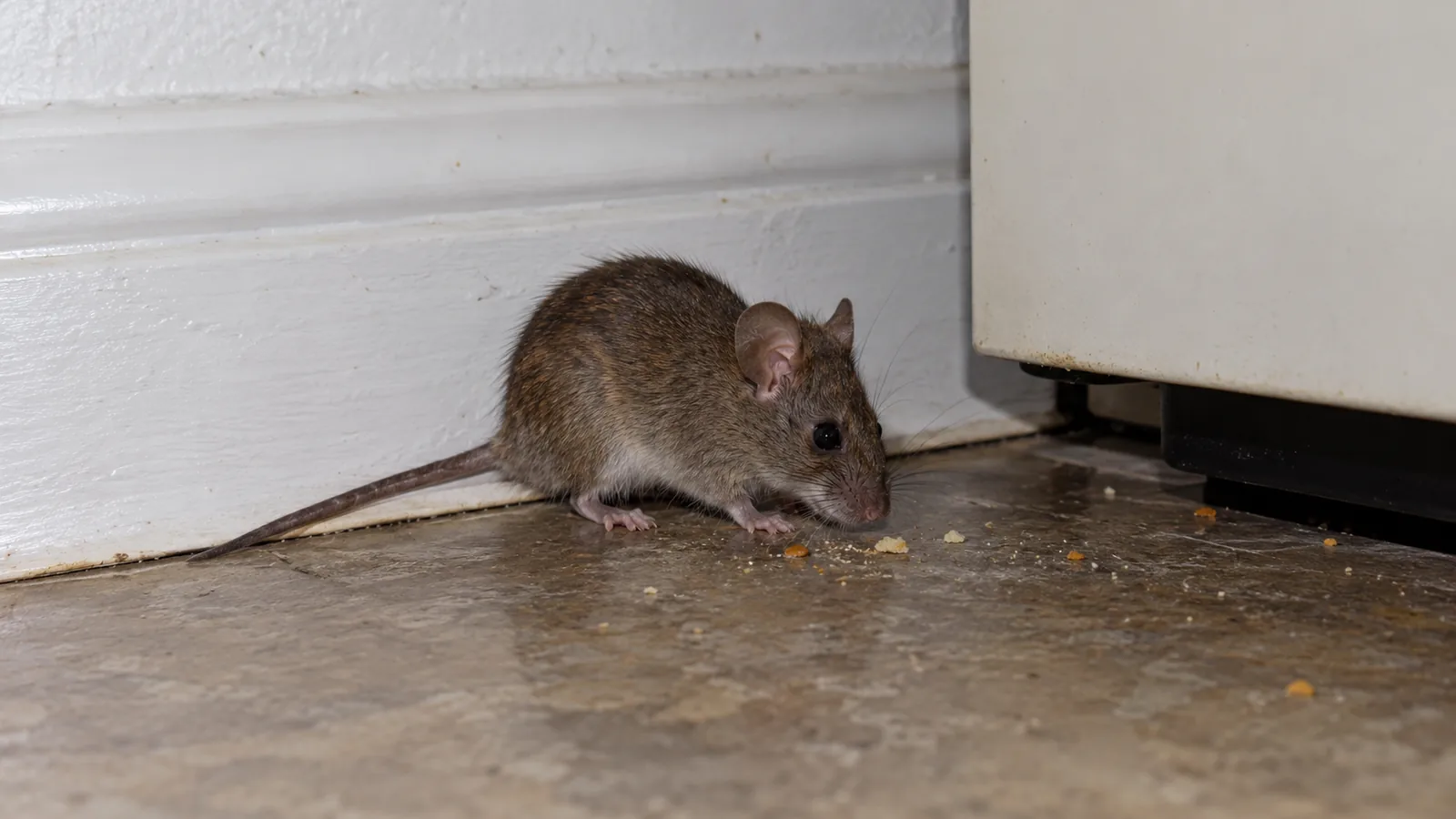
Inside the city limits, homes sit closer together, trash goes out on a weekly city route, and most houses connect to city water and sewer. Rodent problems there often spread between neighbors, and sewer lines and shared alleys can play a part. Out in the county, many homes are on wells and septic systems, trash is often hauled to convenience sites or picked up by private haulers, and properties have outbuildings, woods and fields around them. Rural jobs usually involve more ground to inspect and more outdoor food sources to manage, while city jobs focus more on tight entry points and what is happening next door. Either way, sealing the house is the step that lasts.
Coverage Questions
How do I know if my address is covered?
Call and give your street address and ZIP code. Coverage depends on the providers available for your area, and the call will connect you with one who serves it when available.
My neighborhood is not listed. Can I still call?
Yes. The list above covers the main parts of Durham and nearby towns, not every street. If you are in or near Durham County, mention your address and ask.
Is there a charge for being connected with a provider?
There is no charge to you for the referral itself. The independent provider you speak with will explain their own pricing for any inspection or service before work begins.
Do rodent problems really differ by neighborhood?
The animals are the same, but the housing, water, woods and construction around you change where they get in and how the job is done. That is why each area above highlights different issues.
Main Durham Page
For an overview of rodent problems across the city, including species, signs and seasons, see rodent control in Durham. This site is a referral service connecting callers with independent local providers. Population and housing figures referenced across the site come from the U.S. Census Bureau.
Your call connects you with an independent local pest control provider.