Attics and crawl spaces · Durham, NC
Attic Rodent Removal Durham NC: Clearing Rodents Above and Below the House
The two places you rarely look are where rodents do the most damage. Attics fill with nests and droppings in the insulation, and crawl spaces end up with torn ductwork and pulled-down batts. This page covers how rats and mice get into each space in Durham homes and what clearing them properly involves.
- Attics and roof returns
- Vented and sealed crawl spaces
- Wiring, ducts and insulation
Your call connects you with an independent local pest control provider.
Two Different Paths Into a Durham House
Attic problems and crawl space problems often get lumped together, but rodents usually reach them in different ways, and the fix depends on which path they took.
The attic path
Mice climb brick, siding and downspouts easily, and Norway rats climb better than most people expect. In Durham, the attic route usually starts with tree limbs touching the roof, a gap where the soffit meets the roofline, a damaged gable vent screen or an opening a squirrel chewed years ago. Neighborhoods with big oaks over the houses, like Trinity Park, Duke Park and Forest Hills, see a lot of this.
The crawl space path
Many Durham homes, especially those built before the 1980s, sit on vented crawl spaces with dirt or plastic-covered floors. Rats burrow along the foundation or slip through a broken vent screen. Mice come in through the same vents, the access door and gaps around plumbing. From the crawl space, both travel up through wall cavities and plumbing chases into the house.
Some homes have both problems at once: mice nesting in the attic and rats in the crawl space. A good inspection checks top and bottom before anyone sets a trap.
Where Rodents Nest in Common Durham House Styles
The layout of the house decides where rodents settle, and Durham has a few common layouts worth knowing.
Craftsman bungalows with knee walls
Bungalows in Trinity Park, Walltown, Old North Durham and Watts-Hillandale often have finished rooms upstairs with short knee walls. The triangular spaces behind those walls are small, unheated attics that rarely get looked at. Mice and rats nest there, right beside bedrooms, and the scratching people hear at night is often coming from behind a closet wall.
Mill houses on piers
Small frame houses in Old West Durham and around Pearl Mill and Golden Belt often have shallow crawl spaces with open sections between brick piers. Rats move in and out freely, and the floor system above becomes a highway. These homes need careful sealing between piers before anything else will hold.
Rooms over the garage
Two-story homes in South Durham, Woodcroft and around Southpoint often have a bonus room built over an attached garage. Mice get into the garage under a worn door seal, climb the garage walls and nest in the ceiling insulation under the bonus room. The fix starts at the garage door, not the attic.
Split-levels and ranches with additions
Mid-century ranches in Hope Valley, Lakewood and Parkwood that have been expanded often have a crawl space under one section and a slab under another. The seam between the two is a classic entry point that is easy to miss from outside.
Signs of Rodents in the Attic
- Noises overhead at night, especially right after dark and before dawn. Light scurrying suggests mice; heavier thumps and dragging suggest rats.
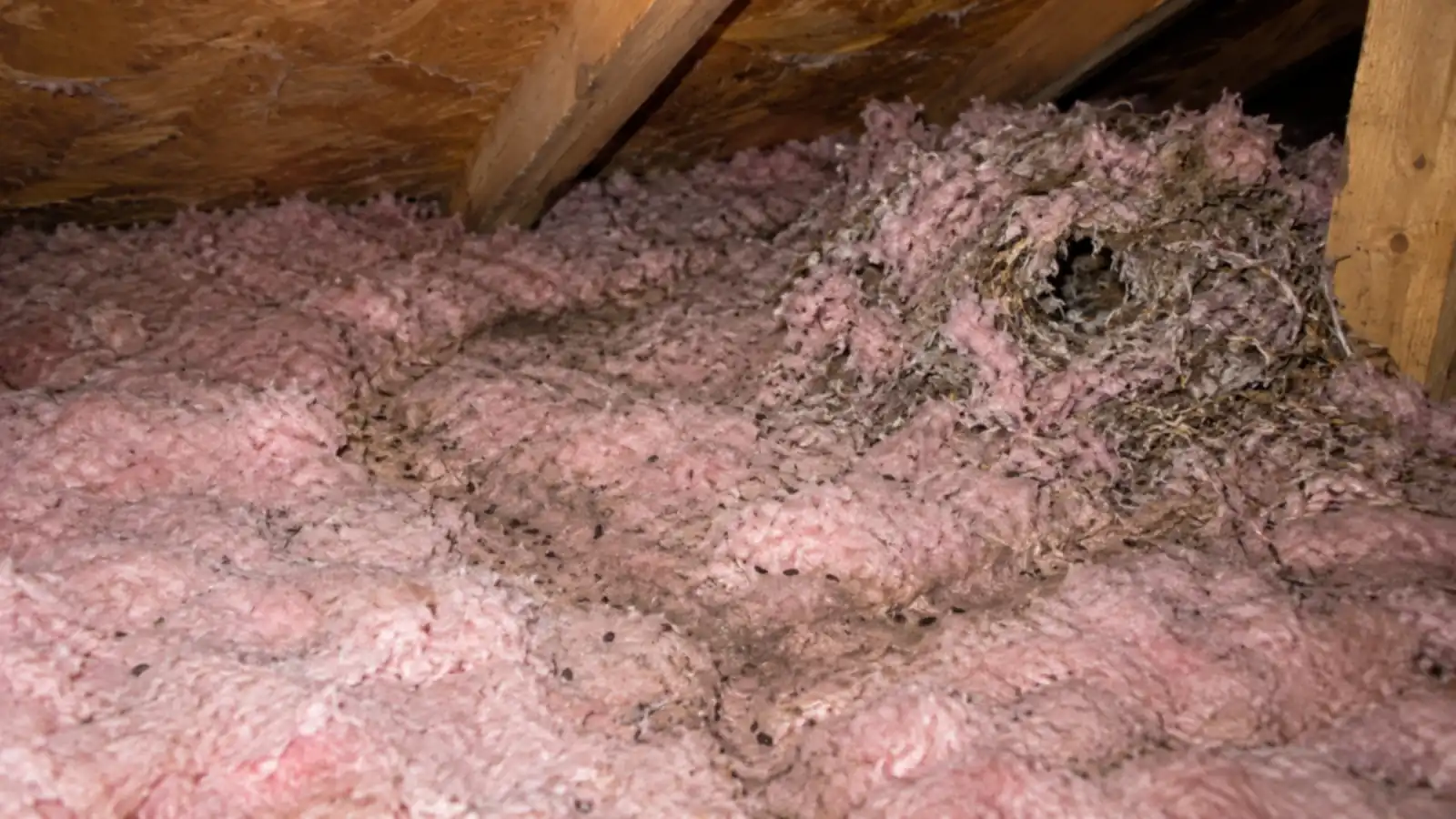
- Droppings on top of the insulation, along the top plates of walls and near the attic hatch.
- Tunnels and trails through blown-in insulation, and flattened paths where rodents run the same route every night.
- Chewed wiring on cable runs, light fixture boxes and the wiring to bathroom fans.
- A sharp ammonia odor near the attic access or in second-floor closets from accumulated urine.
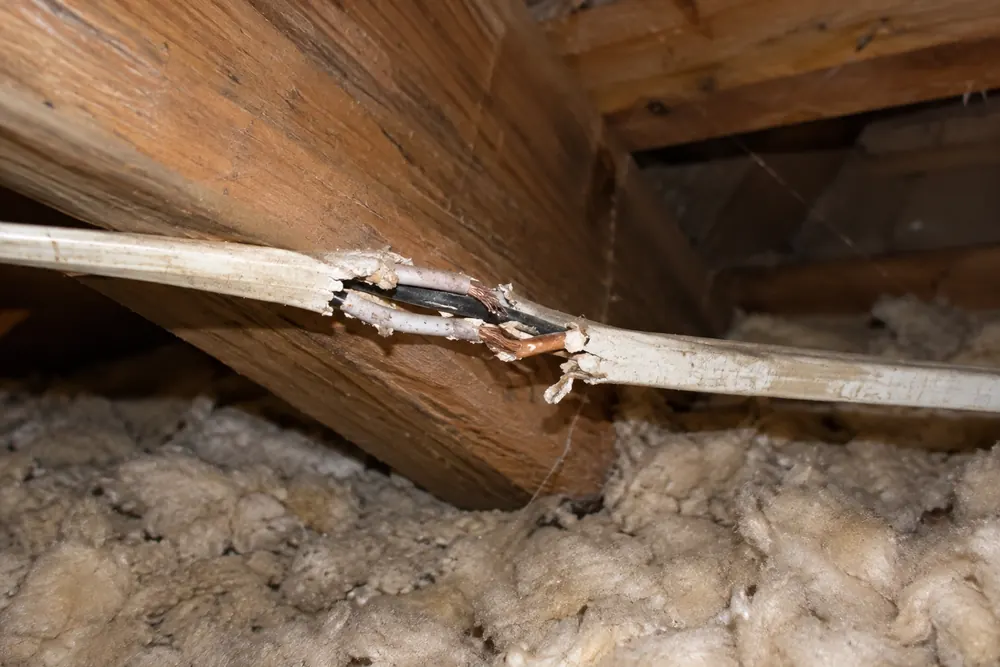
Rodent incisors grow constantly, so they gnaw on whatever is close, and the soft plastic jacket on electrical cable is an easy target. Chewed wiring in an attic is a fire risk. If you find bare copper, have an electrician look at it after the rodents are out.
Signs of Rodents in the Crawl Space
- Insulation batts hanging down or lying on the ground between floor joists, often with nests tucked behind them.
- Torn or chewed flexible ductwork, sometimes with nesting material inside the duct.
- Droppings on the vapor barrier and along sill plates, and dark rub marks on joists where rats travel.
- Burrows in the dirt floor or along the foundation wall inside the crawl space.
- Odors in the house when the HVAC system runs, because leaky ducts in the crawl space can pull air from a contaminated space into the rooms.
Does Crawl Space Encapsulation Keep Rodents Out?
Crawl space encapsulation is popular in the Triangle because of summer humidity. The process seals the vents, lines the floor and walls with heavy plastic and conditions the air. People often assume that also ends rodent problems. It helps, but it is not exclusion.
- Sealing the vents does remove one of the most common entry points, which is a real benefit.
- Rodents can still enter through sill gaps, plumbing penetrations, the access door and foundation cracks.
- Once inside, rats and mice chew through plastic liners and foam board, and an encapsulated crawl space is warm and dry, which they like.
If you are planning encapsulation, have the rodent problem dealt with first and make sure the contractor seals every penetration with chew-resistant materials. Our rodent exclusion page lists what holds up.
Attic Rodent Removal Durham NC: How the Work Is Done
Inspection top to bottom
Attic, crawl space, roofline and foundation. The provider identifies which rodent is involved, where it nests, and every way it gets in.
Trapping in place
Traps go along the runways and nesting areas in the attic and crawl space. Poison is avoided in enclosed spaces because a carcass in insulation or under a subfloor causes odor for weeks.
Sealing the access routes
Roof returns, soffit gaps, gable vents, crawl space vents, the access door and utility penetrations are closed with metal mesh, flashing and mortar.
Removing contaminated material
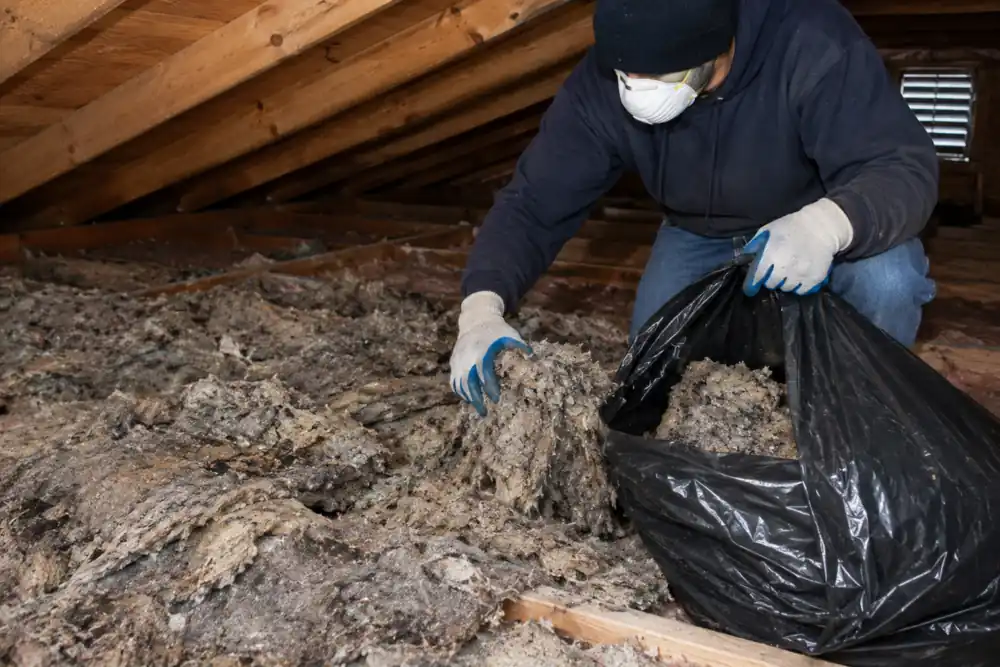
Heavily soiled insulation is bagged and removed. Nesting material is cleared from ducts and joist bays. This is done with protective gear and wet methods so dust and droppings are not stirred into the air.
Sanitizing and restoring
Surfaces are disinfected, and insulation is replaced once the space is clean. Damaged ductwork or wiring should be repaired by the right trade.
The cleanup part of the job has its own page: attic droppings cleanup explains the safe method and what to ask for.
Your call connects you with an independent local pest control provider.
What to Do Before Anyone Goes Up or Under
It is tempting to grab a flashlight and climb into the attic the moment you hear scratching. A few precautions keep you safe and make the inspection more useful.
- Do not stir up droppings. Dry sweeping or vacuuming droppings and nests can put dust and particles into the air. The CDC recommends wetting droppings with disinfectant before any cleanup (CDC guidance).
- Keep the attic hatch closed and put a towel along the bottom of a crawl space door inside the house if you notice odors coming through.
- Watch for electrical warning signs. A burning smell, flickering lights on one circuit or a breaker that keeps tripping can mean chewed wiring. Call an electrician for those, not just a rodent provider.
- Take photos from the hatch rather than walking across joists. Pictures of droppings, nests or damaged ducts help the provider plan.
- Note the timing of noises. Sounds right after dark and before dawn point to rodents. Daytime noise in the attic is more often squirrels, which is a different job.
Is There Insulation Rodents Will Not Nest In?
Not really. Mice and rats nest in fiberglass batts, blown fiberglass and cellulose alike. Some cellulose insulation is treated with borates, which can discourage insects, but it does not keep rodents out of an attic they can reach. Spray foam is harder to nest in, but rodents still tunnel through it at the edges.
The type of insulation matters much less than whether rodents can get into the space at all. Spend the money on sealing the attic and crawl space first, then replace insulation with whatever suits the house.
Attic and Crawl Space Problems in Rentals and Older Buildings
In Durham duplexes and older multi-unit houses, the attic or crawl space is often shared, and rodents move freely between units above or below the living space. Treating one tenant’s unit while the shared attic stays open rarely works for long. Landlords should plan inspection and sealing for the whole structure.
Commercial buildings with drop ceilings have a similar problem: the ceiling void acts like an attic that runs across several suites. Mice in one office often mean mice in the ceiling above the whole floor. See commercial rodent control for how ongoing monitoring handles that.
Attic and Crawl Space Questions
How do I know if rodents are in my crawl space?
Look for insulation hanging down between joists, droppings on the vapor barrier, torn ducts and burrows in the dirt floor. Odors in the house when the HVAC runs are another clue. If you do not want to go under the house yourself, a provider can check it during the inspection.
Will rodents leave the attic on their own?
Rarely. An attic gives them warmth, nesting material and safety. They may become quieter in summer when outdoor food is plentiful, but they usually return in fall, and they keep breeding in the meantime.
Do I need to replace all my attic insulation?
Not always. Lightly affected areas can sometimes be cleaned and left. Insulation that is matted, soaked with urine or full of droppings and nests should be removed. The provider should show you which areas are contaminated before recommending full replacement.
Can rodents in the crawl space get into the walls?
Yes. Plumbing and wiring holes through the subfloor and gaps at the base of interior walls let rodents climb from the crawl space into wall cavities and up to the attic.
Related Rodent Services in Durham
Rodent Exclusion
Sealing roof returns, vents and foundation gaps.
Roofline and vent sealing →Rodent Cleanup
Removing soiled insulation and disinfecting safely.
Cleanup and sanitation →Dead Rodent Removal
Finding a carcass in the attic, walls or crawl space.
Dead rodent smell →This site is a referral service. Calls are connected with independent rodent control providers serving Durham, NC. See how it works.
Your call connects you with an independent local pest control provider.