
Durham, North Carolina · Rats and mice only
Rodent Control Durham NC: Rats, Mice and the Gaps They Use
Scratching in the ceiling at 2 a.m., droppings behind the stove, a smell nobody can place. We connect Durham homeowners, renters, landlords and businesses with independent local rodent control providers who find how the animals get in, remove them and close the way back.
- Durham County and nearby towns
- Homes, rentals and businesses
- Removal, sealing and cleanup
Your call connects you with an independent local pest control provider.
Rodent control in Durham is rarely about one mouse. By the time most people notice droppings or hear movement in a wall, rats or mice have been living inside for weeks, using a gap at the foundation, a crawl space vent or a roofline seam that nobody has looked at in years. This site explains what is going on in Durham houses and buildings, how to tell which rodent you have, and what a proper job looks like, so the conversation you have with a provider is short, specific and useful.
We are a referral service, not an exterminator. When you call (919) 887-1651, you are connected with an independent provider who serves your part of Durham County. More on that in how the referral works.
Why Durham Homes Get Rodents
Durham has three things rodents like: a lot of older wood-framed houses sitting on crawl spaces, a web of creeks and wooded buffers running right behind neighborhoods, and steady construction that keeps disturbing the ground they nest in.
Mill-era houses
Many homes in Old West Durham, Walltown, East Durham and around the old Erwin and Pearl mills date from the 1890s to the 1920s. Pier foundations, settled sills and decades of patched siding leave gaps rodents can squeeze through.
Creeks behind the yard
Ellerbe Creek, Third Fork Creek and the Eno River corridor give Norway rats soft, damp banks to burrow in, with backyards, compost and bird feeders a short walk away.
Constant building
Durham County issued 4,772 residential building permits in 2025. Clearing lots and digging foundations pushes resident rats and mice into the nearest occupied buildings.
Heavy tree canopy
Mature oaks and pines over Trinity Park, Duke Park and Forest Hills drop nuts and give rodents cover, and branches touching the roof give them a highway to the attic.
Add a mild Piedmont winter and plenty of food from restaurants, dumpsters and pet bowls, and rodents here stay active most of the year. Durham County has about 164,000 housing units, and only around 55 percent are owner-occupied, so a large share of the people dealing with rodents are renters waiting on a landlord, or landlords juggling several properties at once (U.S. Census QuickFacts).

Which Rodent Is in Your Durham Home?
Getting the species right decides where a provider looks, which traps they use and which gaps matter. In Durham, you are almost always dealing with one of two animals.
| Trait | Norway rat | House mouse |
|---|---|---|
| Size | Heavy-bodied, roughly 12 to 18 inches nose to tail tip | Small and slender, about 5 to 7 inches including the tail |
| Where it lives | Burrows in soil along foundations, under slabs, in crawl spaces and creek banks | Nests inside walls, cabinets, insulation, garages and stored boxes |
| Droppings | About 3/4 inch, capsule-shaped, blunt ends | About 1/4 inch, rice-like with pointed ends |
| Gap it needs | About 1/2 inch | About 1/4 inch |
| Behavior | Cautious of new objects, so traps can sit untouched for days | Curious, forages within 10 to 25 feet of the nest |
Roof rats, the climbing species common along the Gulf Coast, are scattered and uncommon across most of North Carolina. If someone tells you the noise in your Durham attic has to be roof rats, ask how they know. Norway rats climb pipes and wiring too, and mice reach attics easily through wall cavities. Native cotton rats and woodrats live in fields and woods and rarely come indoors. Our roof rat and Norway rat comparison walks through the differences in detail.

Signs That Point to an Active Problem
You do not need to see the animal. These are the clues worth checking first, roughly in the order people notice them.
- Sounds after dark. Light scratching or skittering inside walls suggests mice. Heavier thumps, gnawing or something being dragged across the attic floor suggests rats.
- Droppings. Fresh ones are dark and soft. Gray, crumbly droppings may be old, which matters if you just bought the house.
- Gnaw marks. Fresh wood shavings near baseboards, chewed food packaging, or bite marks on plastic pipes and wiring.
- Rub marks. Greasy dark smudges along joists, sill plates and the edges of holes where rats travel the same route every night.
- Burrows. Holes about 2 to 4 inches wide along the foundation, under shrubs or beside an HVAC pad, often with smooth, packed edges.
- Nests and odor. Shredded insulation, paper or fabric in a hidden corner, and a sharp, musky ammonia smell in closed spaces.
Our signs of rodents guide has photos and a room-by-room checklist if you want to confirm before you call.

What Happens When You Call
Here is what a typical Durham job looks like with the providers we connect you to. Details vary by company, so ask about each step when you talk to them.
The phone conversation
You describe what you have seen or heard, where, and for how long. Have a rough idea of your home’s age and whether it sits on a crawl space or a slab.
The inspection
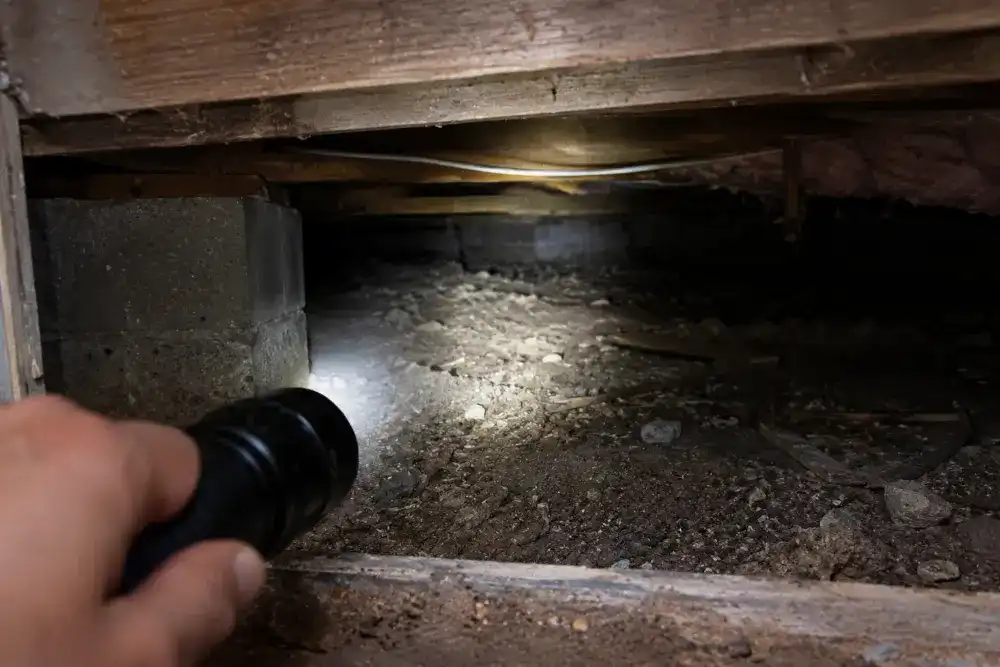
The provider walks the outside at ground level and along the roofline, goes into the crawl space and attic, and checks the garage, kitchen and utility penetrations. The goal is to map every entry point, not just find the animals.
A written plan
You should get a clear scope: which openings will be sealed, with what material, how trapping will be handled, and how many follow-up visits are included.
Removal
Usually trapping inside, with tamper-resistant bait stations outside when appropriate. Expect several visits over one to three weeks for rats.
Exclusion
Gaps are closed with materials rodents cannot chew through: hardware cloth, steel or copper mesh, metal flashing, door sweeps and sealed utility openings.
Cleanup and follow-up
Droppings and soiled insulation are removed safely, and a final check confirms there is no new activity.
When you call, it helps to know where the activity is, how long it has been going on, whether you have pets or small children, and whether you own or rent. That one-minute summary gets you a much better first conversation.
Your call connects you with an independent local pest control provider.
Rodent Services in Durham
Each problem below has its own page with the Durham-specific detail. Start with the one that sounds most like your situation.
Rat Removal
Norway rats burrowing along foundations and nesting in crawl spaces near Durham’s creeks.
Rat removal in Durham →Mouse Control
Mice moving into kitchens, walls and garages when the first cold nights arrive.
Mouse control details →Rodent Exclusion
Sealing the gaps in older Durham houses so rodents stop coming back.
How sealing works →Attic & Crawl Space
Nests in insulation, chewed wiring and torn ductwork above and below the house.
Attic and crawl space help →Rodent Cleanup
Safe removal of droppings, urine-soaked insulation and nesting material.
Cleanup and sanitation →Dead Rodent Removal
Finding the source of a smell that will not go away, especially in a humid Durham summer.
Odor and carcass removal →Commercial Service
Restaurants facing inspections, apartment complexes, offices and warehouses.
Business rodent programs →Older Homes, Crawl Spaces and Durham Rodent Control
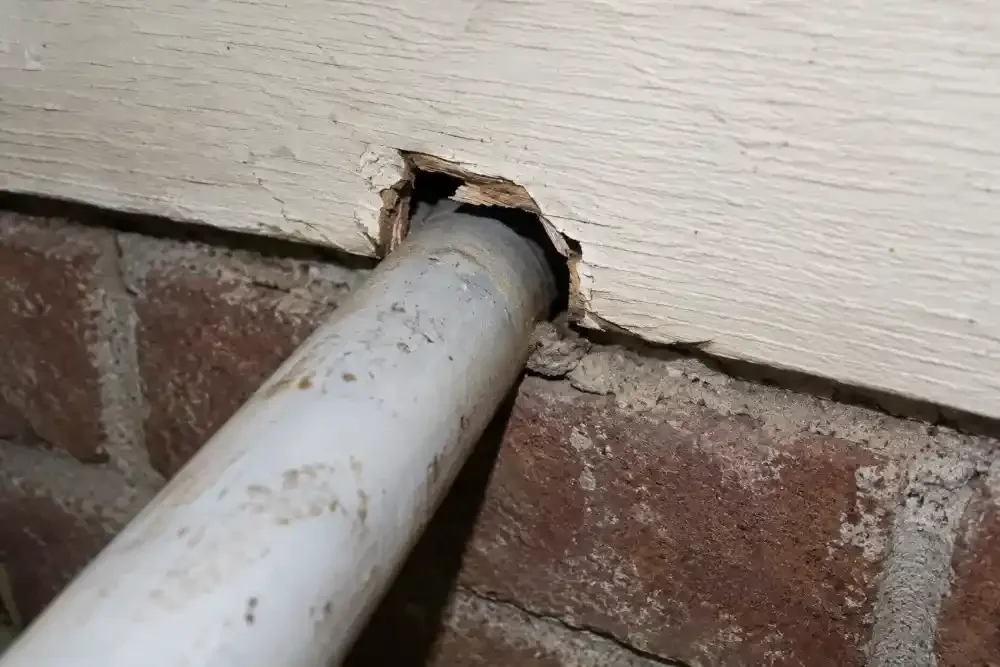
A large share of Durham rodent control work comes back to the same structure: a frame house on a vented crawl space, built before modern sill sealing. Mill houses in Old West Durham and around Pearl Mill, bungalows in Walltown and Old North Durham, and post-war ranches in Northgate Park all share some version of the same weak spots.
- Foundation vents with rusted or missing screens, or plastic covers that a rat can chew through in a night.
- Settled sill plates where the wood framing no longer meets the brick or block piers tightly.
- Utility penetrations where gas, water, cable and HVAC lines enter, often packed with loose foam or nothing at all.
- Additions and porches joined to the original house, leaving a seam that runs straight into the floor system.
- Roof returns and soffits on older rooflines, where squirrels often open a hole that mice and rats later use.
Mice need a gap about the width of a pencil. A young rat needs little more than a half inch. That is why a house can be trapped clean in October and full again by January if nobody closes those openings. The rodent-proofing page explains which materials hold up and which ones rodents chew through.
Rodent Season in Durham, Month by Month
October to February
Peak indoor season, and the busiest stretch for rodent control in Durham. First frosts usually arrive in late October or early November, and mice move into garages, kitchens and wall voids within days of the first cold nights.
March to May
Breeding picks up. A pair of mice that wintered in your walls can have several litters before summer, and young rats start exploring new burrow sites.
June to September
Rats stay busy outside around dumpsters, gardens, bird feeders and creek banks. Dead rodents in walls smell far worse in Durham’s humid heat.
Mild winters mean activity never stops completely here. Rats in a warm crawl space under a heated house will breed year-round if food is nearby.
For Renters, Landlords and Businesses
Almost half of Durham County homes are rented, so the question of who deals with rodents comes up constantly.
If you rent
North Carolina’s landlord-tenant law treats a rat infestation caused by defects in the structure as an imminently dangerous condition a landlord has to fix (N.C.G.S. 42-42). Put the problem in writing, date it, and keep photos. If the landlord does not act, the City of Durham’s Code Enforcement handles minimum housing complaints, and Durham One Call can route the request.
If you own rentals
One infested unit usually means a shared wall, crawl space or dumpster problem affecting others. Documented service across all units protects you better than treating the complaint and waiting for the next one.
If you run a restaurant or food business
Durham County Environmental Health grades food businesses on a 100-point scale, and rodent evidence costs points fast. An A is 90 or higher, a B runs from 80 to just under 90, and a C from 70 to just under 80, and those scores are public. Commercial rodent control in Durham covers monitoring, service logs and discreet scheduling.
Why Traps Alone Keep Failing
If you have caught three mice and a fourth showed up last night, the traps are working. The house is the problem. Trapping removes animals that are already inside, but every opening that let them in is still open, and the smell trails left behind lead new rodents straight to it.
Store-bought poison causes its own trouble. Since 2011, the EPA has required rodenticides sold to homeowners to come in tamper-resistant bait stations, and the strongest second-generation anticoagulants are limited to professional use (EPA rodenticide restrictions). Even with legal products, a poisoned rat often dies inside a wall or under a floor, which turns a noise problem into an odor problem. Ultrasonic plug-ins and peppermint oil have little evidence behind them; our article on whether rodent repellents work covers what the research shows.
What Rodents Damage While You Wait
People often put off calling because a few mice seem more like a nuisance than something urgent. The damage builds quietly, though, and most of it happens where nobody looks.
Wiring
Rodent incisors never stop growing, so they gnaw on whatever is handy, including the plastic jacket on electrical cable in attics and wall cavities. Chewed wiring is a known fire risk and is expensive to trace once insulation is covering it.
Insulation
Mice and rats tunnel through attic and crawl space insulation and soak it with urine. Once it is matted and contaminated it stops insulating, and in many Durham attics it has to be bagged and replaced.
Ductwork
Flexible ducts in crawl spaces are easy to chew. A torn supply duct blows conditioned air into the crawl space and can pull droppings odor into the house when the system runs.
Health
Rodent droppings and urine can spread bacteria such as Salmonella and Leptospira, and mouse allergens are a recognized asthma trigger for children. Fleas and mites ride along on the animals too.
Hantavirus worries a lot of people, and it is worth keeping in perspective: North Carolina has recorded a single case, in 1995, and the main carrier is the deer mouse, not the house mouse found in most Durham kitchens (NCDHHS). The same agency still advises against sweeping or vacuuming droppings dry, which is why careful rodent cleanup matters even when the risk is low.
Areas We Cover Around Durham
Durham rodent control providers in our network cover the City of Durham and surrounding parts of the Triangle. Coverage can vary by ZIP code, so mention your address when you call.
Central and North Durham
Downtown, Trinity Park, Duke Park, Walltown, Old North Durham and Northgate Park, mostly ZIPs 27701, 27704 and 27705.
East and West Durham
East Durham, Golden Belt and Cleveland-Holloway in 27703, and Old West Durham near Duke’s campus in 27705.
South Durham
Hope Valley, Woodcroft, Forest Hills and the Southpoint area across 27707 and 27713, plus Research Triangle Park.
Nearby towns with their own pages: rodent control in Chapel Hill, Carrboro, Morrisville and RTP, Hillsborough, Butner and Creedmoor and Bahama and Rougemont. The full list is on our areas we serve page.

Rodent Control Durham: Common Questions
Where do I find rodent control in Durham?
You can call (919) 887-1651 to be connected with an independent provider covering your ZIP code, or contact a pest control company directly. Either way, look for someone who will inspect the whole structure and seal entry points, not only set traps.
Is professional rodent control worth it?
For one mouse in a garage, maybe not. For repeat activity, rats under the house, droppings in an attic or anything in a rental or restaurant, usually yes. The value is in finding and closing entry points correctly the first time, which is the step most DIY efforts skip.
Can a regular pest control company get rid of rats and mice?
Many can, but general pest plans built around spraying for insects often treat rodents with bait alone. Ask specifically whether exclusion work is included and whether follow-up visits are part of the price.
What does rodent control actually include?
A full job covers inspection, removal of the animals, sealing the openings they use, cleanup of droppings and nesting material, and a follow-up check. Some providers split these into separate quotes.
How do I check a provider before hiring?
Anyone doing rodent control for hire in North Carolina must hold a credential from the NCDA&CS Structural Pest Control and Pesticides Division. You can look a company up with the state’s credential search before work starts.
How This Site Works
Carvell Rodent Control Durham is a referral service. We do not send technicians or perform rodent control ourselves. Calls placed through this site are routed to independent, participating providers who serve the Durham area, and those providers may pay for the referral. Read more on our referral disclosure page.
Your call connects you with an independent local pest control provider.