Dead rodents and odor · Durham, NC
Dead Rodent Removal Durham NC: Tracking Down the Smell and Removing It
A sweet, rotten odor that gets worse each day and seems to come from everywhere at once is almost always a dead rat or mouse inside a wall, under the floor or in the crawl space. Dead rodent removal means finding the carcass, taking it out, treating the area and closing the gap that let the animal in.
- Walls and ceilings
- Crawl spaces and attics
- Ducts and behind appliances
Your call connects you with an independent local pest control provider.
Why the Smell Is So Bad in Durham
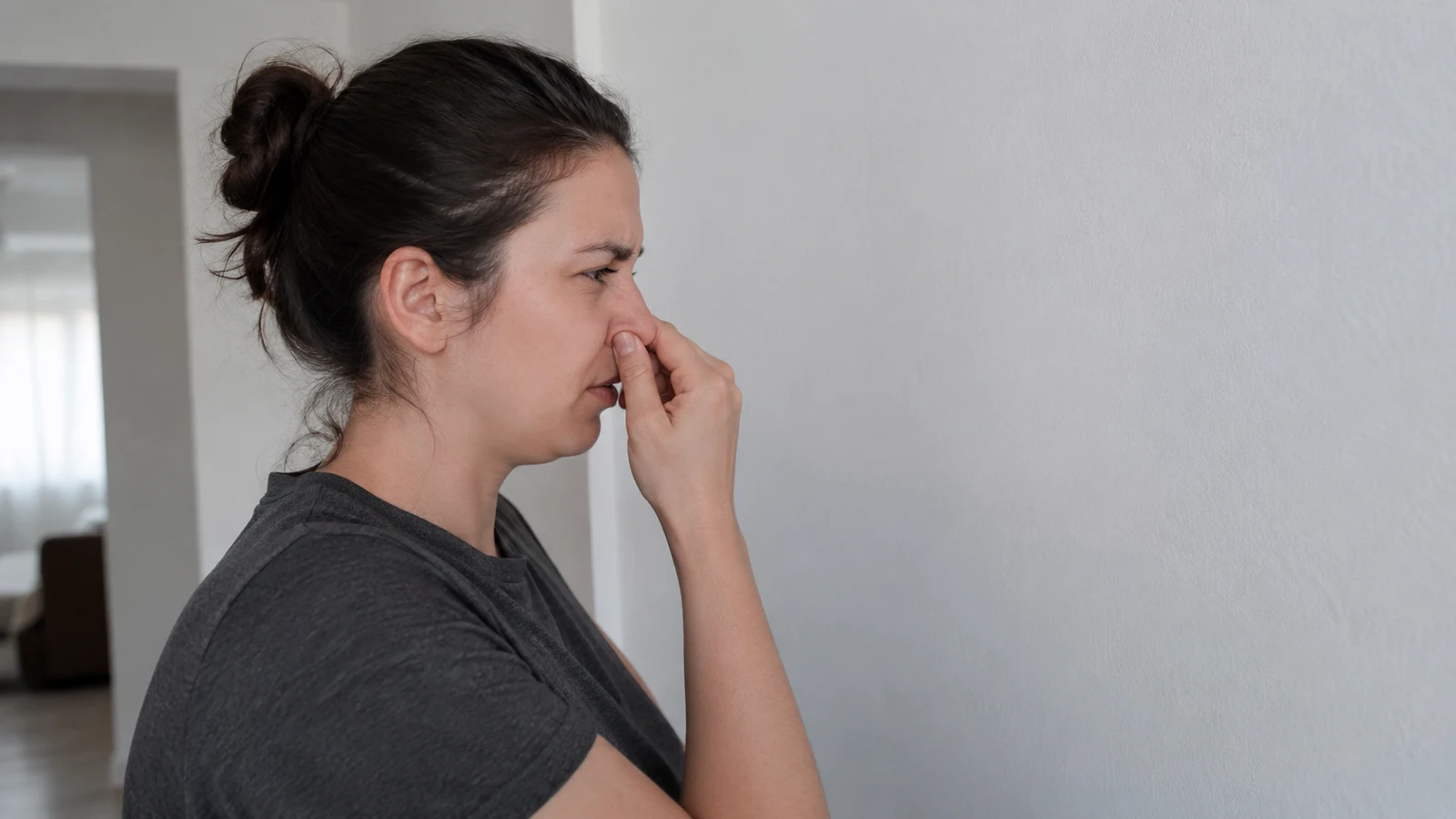
Decomposition speeds up with heat and moisture, and Durham has plenty of both from May through September. A dead mouse in a wall during a mild January might be noticeable for a week. A dead rat in a crawl space in July, with humid air trapped under the house, can fill the rooms above for weeks.
Older Durham homes make it worse in a few ways. Vented crawl spaces under mill houses and bungalows pull damp air in and up through floor gaps. Plaster and lath walls in pre-war houses have cavities that connect from the crawl space to the attic, so odor travels between floors. And the HVAC system in many homes runs ducts through the crawl space, where a carcass near a leaky duct can push the smell into every room.
Is It a Dead Rodent or Something Else?
Before anyone opens a wall, it helps to be sure what you are smelling. A few household odors get mistaken for each other.
- Dead animal: sweet, heavy and rotten, getting stronger over several days and often concentrated near one wall, closet or floor area. Flies may appear indoors.
- Rodent urine: sharp and ammonia-like, strongest in closed spaces such as cabinets, attics and closets, and steady rather than building.
- Sewer gas: a rotten, sulfur smell around drains, often from a dry trap in a rarely used sink, shower or floor drain. Running water in the drain usually fixes it.
- Natural gas: a rotten egg smell from the additive utilities put in gas. If you smell this, leave the house and call your gas utility from outside. Do not treat it as a rodent problem.
How a Rodent Ends Up Dying Inside Your House
- Poison bait. Rodenticides take days to work. A rat or mouse that ate bait outside or in the garage often retreats to a quiet, sheltered spot to die, and that spot is frequently inside a wall, under insulation or beneath the subfloor.
- Traps nobody can reach. A trap set in the crawl space or attic and then forgotten, or a rodent that dragged a trap into a gap, ends the same way.
- Trapped by sealing. If entry points are sealed while rodents are still inside, they can die in wall cavities. This is why sealing has to be coordinated with removal.
- Natural death. In a long-running infestation, older animals die where they nest, and that is often somewhere hidden.
If you are seeing several dead rodents or the smell keeps returning, the underlying infestation is still active. Fix that with rat removal or mouse control along with closing the entry points.
How Long the Odor Lasts
There is no exact timeline, because it depends on the animal’s size, the temperature, humidity and airflow. As a rough guide:
| Animal | Cool, dry conditions | Warm, humid Durham summer |
|---|---|---|
| House mouse | Several days to about 1 week | 1 to 2 weeks |
| Norway rat | 1 to 2 weeks | 2 to 4 weeks or more |
| Several animals | Weeks | A month or longer, in waves |
The odor usually builds for a few days, peaks, then fades as the carcass dries out. Even after the smell fades, the remains, fluids and the flies or beetles they attract are still there. Removing the carcass shortens all of this dramatically.
Dead Rodent Removal Durham Providers Use: 5 Steps to Find It
Follow the strongest point
The odor is strongest close to the source. Providers work room by room, checking at floor level, inside cabinets, behind appliances and at outlets on exterior walls.
Look for flies and stains
Small flies gathering at one window, a light fixture or a baseboard often point to the spot. Staining or damp patches on a ceiling or wall can mark a carcass above or behind it.
Check the crawl space and attic first
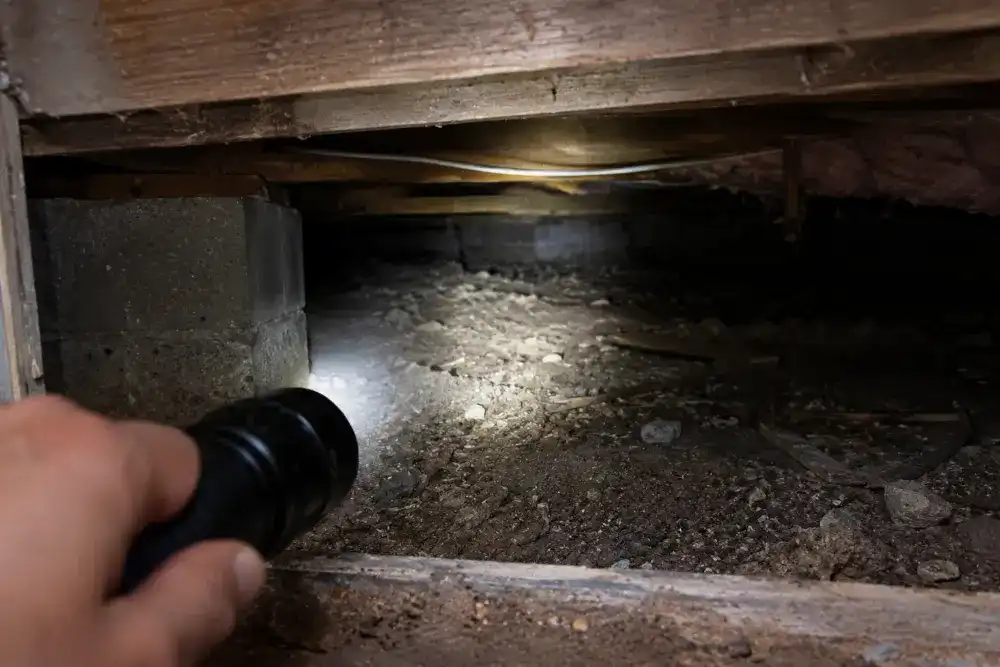
In Durham homes, a large share of dead rodents turn up under the house or in the attic insulation, where they can be removed without opening walls.
Use cameras before cutting
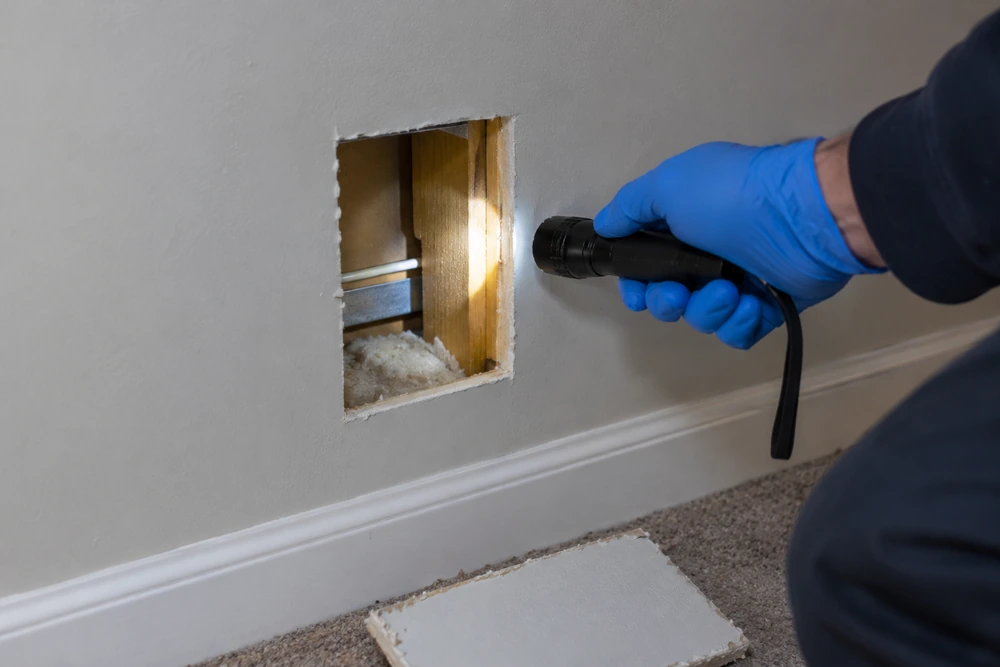
An inspection camera fed through a small hole can confirm the location inside a wall cavity, so only one small opening is needed.
Remove, clean and patch
The carcass is bagged, the surrounding area is disinfected, soiled insulation is removed, and an enzyme odor treatment is applied. Any inspection hole is left small enough to patch easily.
Your call connects you with an independent local pest control provider.
What Helps While You Wait, and What Does Not
If you cannot get the carcass out right away, a few things make the wait more bearable.
- Ventilate. Open windows and run exhaust fans. If the odor is coming through floor registers, close those vents temporarily.
- Absorb odor. Activated charcoal or bowls of baking soda near the source can take the edge off. They do not remove the source.
- Close off the room if the smell is concentrated in one space, and put a towel along the bottom of the door.
Air fresheners and scented candles only layer another smell on top. Some companies offer ozone treatment for severe odors; ozone is a lung irritant, so if it is used, people and pets should be out of the space and it should be aired out afterward, as the EPA advises (EPA on ozone generators).
Is a Dead Rodent Smell Dangerous?
The odor itself is unpleasant rather than toxic at the levels found in homes, but it can cause headaches or nausea for sensitive people. The bigger concerns are what comes with a carcass: bacteria in the remains and fluids, flies and beetles breeding on it, and mites or fleas leaving the dead animal to look for a new host. That is why removal and disinfection matter more than masking the smell.
Handle any carcass with gloves, spray it with disinfectant before picking it up, and double-bag it for the trash. Our sanitizing the area page covers the cleanup steps in detail.
Preventing the Next One
Finding and removing one carcass solves today’s smell. Preventing the next one means two changes. First, avoid using poison bait inside the house or in areas connected to wall cavities; trapping lets you remove the animal. Second, close the openings that let rodents into the structure. Once the house is sealed, rodents stop dying in places you cannot reach. The closing the entry point page explains how that is done on Durham homes.
Rental property owners and managers should keep this in mind: a tenant complaint about a smell is often the first sign of a building-wide rodent problem, especially in older duplexes and apartment buildings with shared crawl spaces.
Homeowners who handle a small mouse problem themselves can avoid most of this by choosing snap traps over bait, checking traps every day, and placing them where a caught mouse can be reached: along kitchen baseboards, behind appliances and in the garage, not deep inside wall voids or under insulation.
Dead Rodent Questions
Who do I call to remove a dead rodent smell?
A rodent control provider is usually the right call, because they can find the carcass, remove it and deal with the infestation that caused it. A general handyman can patch a wall, but finding the source and preventing the next one is rodent work.
What if I cannot find the dead mouse?
Mice are small, and the smell can travel through wall cavities, so the source may not be where the odor is strongest. Check the crawl space, attic, behind the refrigerator and stove, and under the dishwasher. If it is inside a wall, a camera inspection can find it without opening several holes.
Can I just wait for the smell to go away?
You can, but in warm weather it may take weeks, and flies and other insects will feed on the carcass in the meantime. If the smell is in a living area or the HVAC is spreading it, removal is worth it.
Why does the smell come and go?
Odor changes with temperature, humidity and airflow. It is often stronger on hot afternoons and when the AC or heat runs. A smell that returns after fading can also mean a second animal.
Related Rodent Services in Durham
Rodent Cleanup
Disinfecting the area and removing soiled materials.
Cleanup steps →Rodent Exclusion
Sealing the gaps so rodents stop getting into walls.
Sealing entry points →Attic & Crawl Space
Where most dead rodents in Durham homes are found.
Attic and crawl space →This site is a referral service. Calls are connected with independent rodent control providers serving Durham, NC. See how it works.
Your call connects you with an independent local pest control provider.