
How to Get Rid of Mice in Your House: A Durham Homeowner’s Guide
Short answer: To get rid of mice in your house, find where they are active, set plenty of snap traps along walls in those spots, seal every gap a quarter inch or larger, remove easy food, and keep checking until you go at least a week with no new droppings or catches. Repellents and a single trap rarely work. In Durham, most mice come in through garage doors, gaps around utility lines and crawl space vents as nights cool in October.
This guide walks through each step in order, explains what usually goes wrong, and covers when it makes sense to bring in a professional.
Step 1: Confirm It Is Mice
Before you buy anything, make sure you are dealing with mice and not rats, because the traps and gap sizes differ.
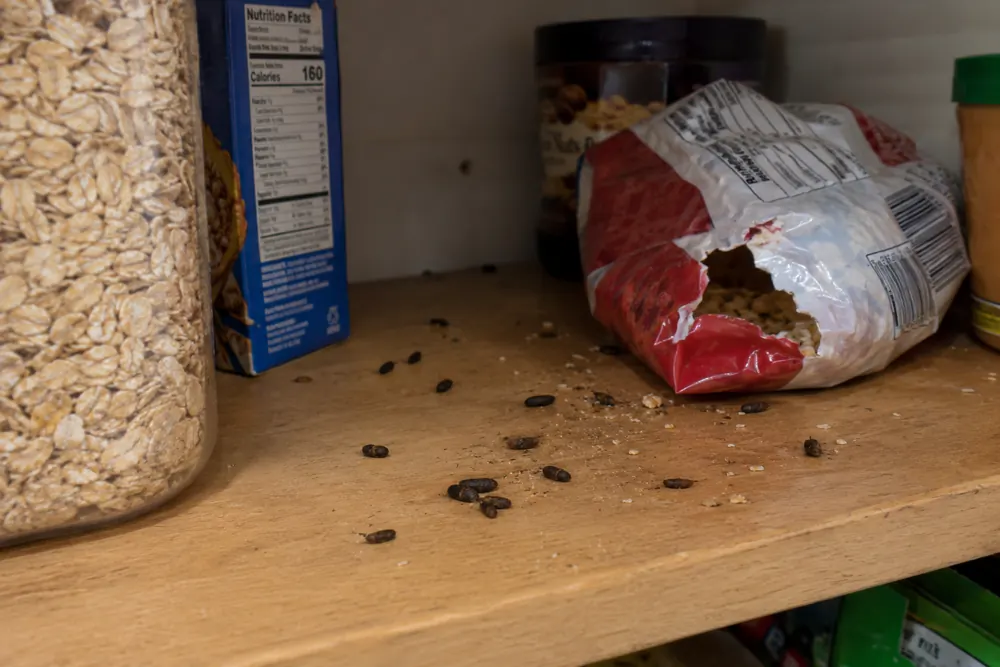
- Droppings: mouse droppings are about a quarter inch long, thin and pointed. Rat droppings are closer to three-quarters of an inch and blunt.
- Sounds: mice make light, quick scratching sounds in walls and ceilings, mostly at night. Heavier thumping and gnawing suggest rats.
- Damage: mice leave small, neat holes in food packaging and shred paper and fabric for nests.
If you are not sure, our signs of rodents guide helps you tell the difference.
Step 2: Find Where the Mice Are Active
House mice usually stay within 10 to 25 feet of their nest, so the places where you find droppings are the places to focus. Check:
- Under the kitchen sink and inside lower cabinets.
- Behind and under the stove, refrigerator and dishwasher.
- The pantry floor and back corners of shelves.
- Behind the washer and dryer.
- The garage, especially along walls and behind stored boxes.
- The attic, from the hatch, looking for droppings on the insulation.
Make a quick list of every spot with droppings or chewed packaging. That list becomes your trap plan.
Step 3: Choose the Right Traps
For most homes, plain wooden or plastic snap traps are the most effective and least expensive option. They kill quickly, they are easy to check, and you can remove the mouse, which avoids the smell of a mouse dying in a wall.
- Snap traps: the workhorse. Buy more than you think you need; a dozen is reasonable for an active kitchen.
- Enclosed snap traps or trap boxes: keep children and pets away from the trigger. A good choice in homes with kids, dogs or cats.
- Multiple-catch live traps: useful in garages and storage rooms, but they must be checked daily.
- Electronic traps: effective and easy to empty, though more expensive per trap.
Avoid glue boards. They cause slow, distressing deaths, can catch pets and wildlife, and a struggling mouse spreads urine and droppings across the board. Avoid putting poison bait inside the house too; poisoned mice often die inside walls, and loose bait is a hazard for children and pets.
Step 4: Place Snap Traps the Right Way
Most failed attempts to get rid of mice come down to trap placement, not the trap itself.
Along walls, not in the open
Mice run along edges. Set traps flush against the wall, with the trigger end facing the wall, so a mouse running along the baseboard crosses it.
Close together
In active areas, set traps a few feet apart rather than one per room. More traps in the right spot catch mice faster.
In the dark spaces
Behind appliances, inside cabinets, under sinks and along the garage walls are better than the middle of a kitchen floor.
With a small amount of bait
A pea-sized dab of peanut butter, chocolate spread or a bit of oatmeal works well. Too much bait lets a mouse feed without setting off the trap.
Checked every day
Check traps each morning, reset them, and move unproductive traps closer to fresh droppings.
Wear gloves when handling traps and mice, and dispose of caught mice in a sealed bag in the outdoor trash.
Step 5: Seal the Gaps So New Mice Cannot Get In
Trapping removes the mice inside. Sealing stops new ones from replacing them, and it is the step that decides whether you get rid of mice for the season or for good. A house mouse can squeeze through a gap about a quarter inch wide.
The most common entry points in Durham homes:
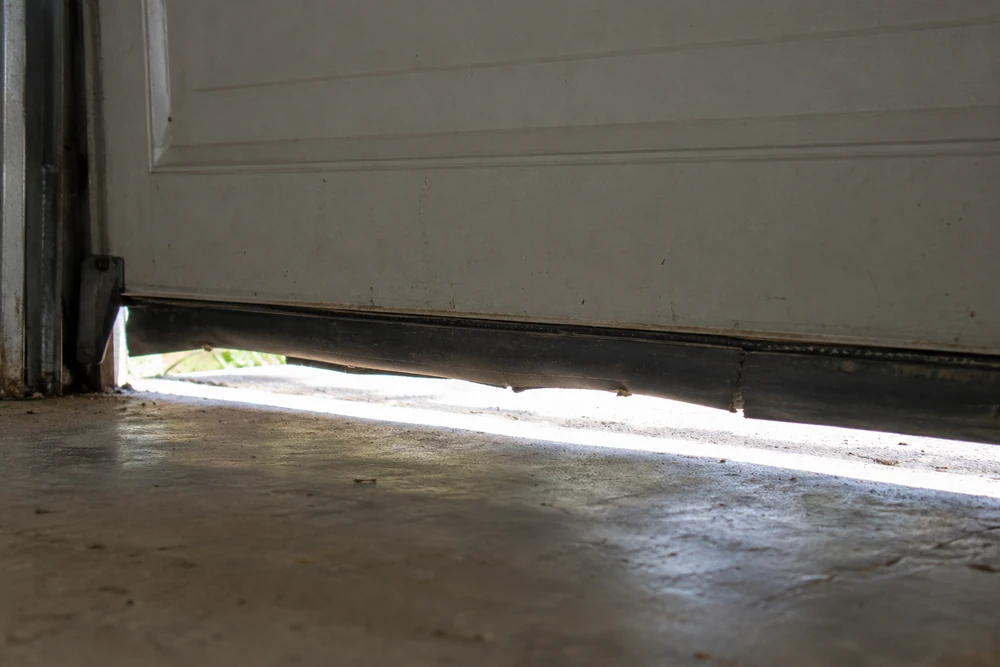
- Garage doors: worn or uneven bottom seals and gaps at the side jambs.
- Utility penetrations: holes around AC line sets, gas lines, dryer vents and cable lines.
- Weep holes in brick veneer on newer homes.
- Crawl space vents and access doors on older homes.
- Exterior doors without sweeps, especially basement and laundry doors.
- Roof returns and soffits where trees touch the roof.
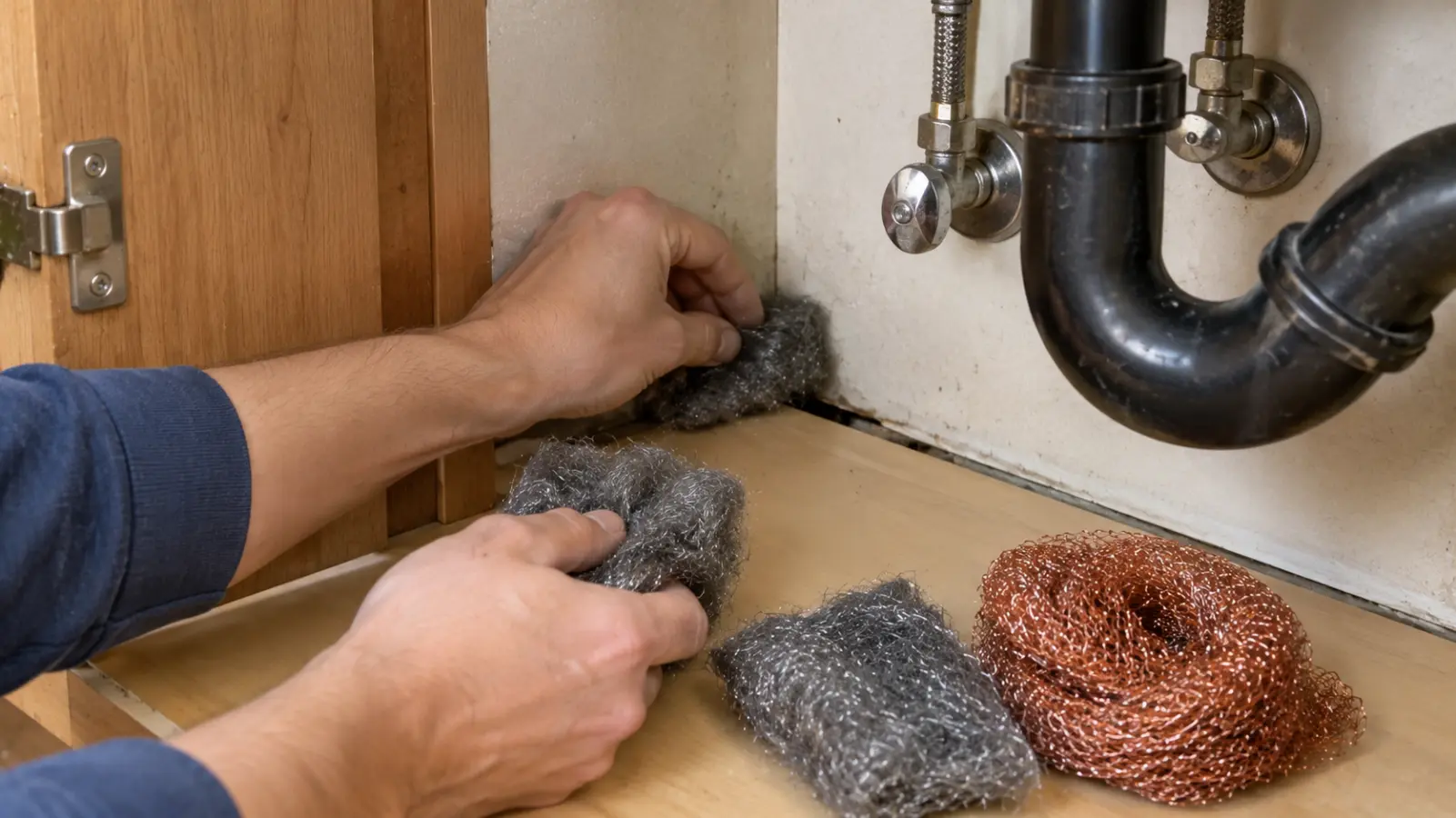
Use copper or stainless steel mesh packed into gaps and finished with sealant, hardware cloth over vents, new door sweeps and a replacement garage door seal. Avoid foam alone, which mice chew through easily. Our rodent exclusion page explains which materials last.
Step 6: Take Away Food and Shelter
- Move cereal, pasta, rice, flour and snacks into glass, metal or heavy plastic containers with tight lids.
- Store pet food and birdseed in sealed bins, and do not leave pet bowls full overnight.
- Wipe up crumbs, especially under the toaster and behind the stove.
- Get cardboard boxes off the garage floor and onto shelves, away from walls.
- Keep firewood outside on a rack away from the house.
You do not need a spotless house to get rid of mice, but less food means traps work faster because the bait becomes more attractive.
Step 7: Clean Up Safely
Once the mice are caught, clean the areas where they were active. Do not sweep or vacuum droppings, which can put particles into the air. Instead, wear gloves, spray droppings and nests with a disinfectant or a bleach solution, let it soak for about five minutes, and wipe up with paper towels. Bag everything and wash your hands well afterward. The full method is on our rodent cleanup page and in the CDC’s guidance on cleaning up after rodents.
Step 8: Confirm the Mice Are Gone
After the last catch, keep traps set and keep checking. A week or more with no catches and no fresh droppings is a good sign, especially if it includes a cold snap. Our article on the 5-day mouse rule explains how to read quiet days and why the first cold front of the season is the real test.
Why You Can’t Get Rid of Mice: Common Mistakes
- Too few traps. Two traps for an active population means weeks of one-at-a-time catches while mice keep breeding.
- Traps in the open. Mice avoid open floors. Traps belong against walls.
- Too much bait. Large globs of peanut butter let mice eat without triggering the trap.
- Moving traps too often or giving up early. Give each spot a few nights.
- Relying on repellents. Plug-ins and peppermint oil do not keep mice out of a house with open gaps. See whether rodent repellents work.
- Skipping the sealing. This is the most common reason mice come back every fall.
When It Is Time to Call a Professional
Doing it yourself works well for a few mice in a kitchen or garage with obvious entry points. It is worth bringing in help when:
- Droppings show up in several rooms or on more than one floor.
- You hear activity in the attic, walls or crawl space and cannot reach it.
- You have trapped for two or three weeks and are still catching mice.
- Mice return every fall despite your efforts.
- Someone in the home has asthma or allergies, or you have very young children.
- You rent, in which case the landlord may be responsible for structural fixes.
- Larger droppings or burrows suggest rats rather than mice.
A professional inspection maps every entry point, including the ones at the roofline and in the crawl space that are hard to see from the ground. Our page on mouse control in Durham explains what that service includes.
Getting Rid of Mice: Common Questions
What gets rid of mice immediately?
Nothing works instantly, but many snap traps set close together along walls in the active area, combined with sealing the entry gaps the same day, produce the fastest results, often within a few days for a small problem.
What bait works well in mouse traps?
A small amount of peanut butter is the most common choice and works well. Chocolate spread, oatmeal or a bit of nesting material like cotton can also attract mice. Use only a pea-sized amount.
How do I get rid of mice in the walls?
Set traps where the mice come out of the walls: under sinks, behind appliances, at gaps around pipes. Seal the outside entry points so no new mice get in. Avoid poison, which can leave dead mice inside the walls.
Will mice leave if there is no food?
Removing food helps traps work and makes the house less attractive, but mice that have shelter and warmth rarely leave on their own. Trapping and sealing are still needed.
Related Articles
- Roof Rats vs Norway Rats: Which Rat Is in Your Durham Home?: how to tell the two rat species apart by tail, ears, droppings and nesting spots.
- What Is the 5-Day Mouse Rule?: what five quiet days after trapping really tell you, and when to keep watching.
- Do Rodent Repellents Work?: what the evidence says about ultrasonic plug-ins, peppermint oil, soap bars and mothballs.