
What Is the 5-Day Mouse Rule? And What Actually Works
Short answer: The 5 day mouse rule is an informal guideline, not a scientific rule. It is most often used to mean that if you go five days in a row with no new mice caught and no fresh droppings, gnawing or noises, the mice are probably gone. It is a useful checkpoint, but it only means something if the entry points have been sealed, the traps are in the right places, and you keep watching for a while longer.
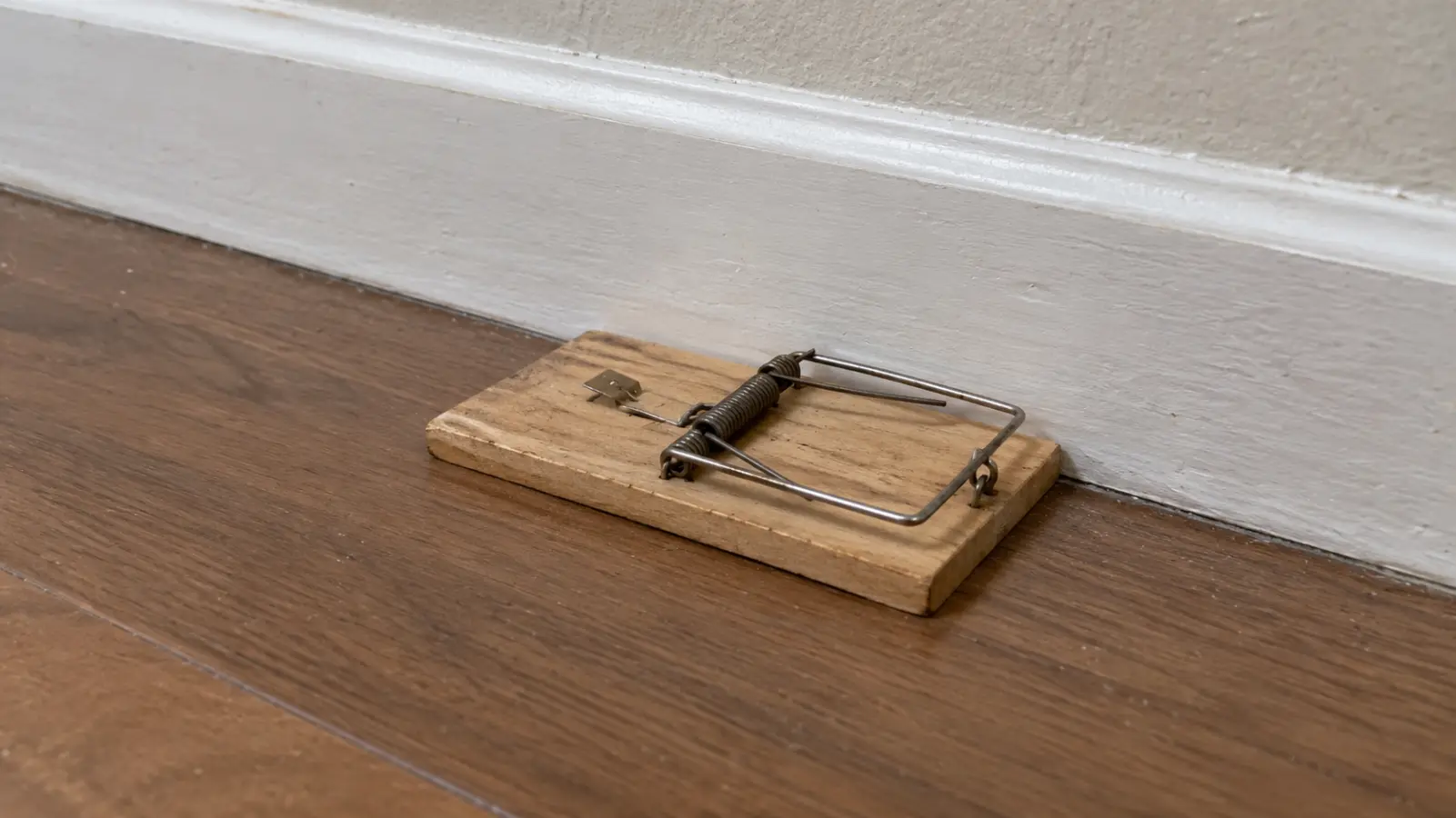
Where the 5 Day Mouse Rule Comes From
There is no official source for the 5 day mouse rule. It circulates on home improvement forums, social media and pest control blogs, and it gets used in a few different ways:
- As a stop-trapping rule: keep traps out until you have gone five days in a row without a catch or new signs.
- As a warning about speed: mice multiply so fast that a problem left alone for even a few days gets noticeably worse.
- As a rule of thumb about one sighting: if you see one mouse, assume more are living nearby within days.
Each version contains some truth, and each can mislead if taken too literally. Here is what the biology actually supports.
What Mouse Biology Says
House mice reproduce quickly, which is why a small problem grows. According to university extension sources, house mice can have five to ten litters a year, typically with five or six young per litter. Pregnancy lasts about three weeks, a female can become pregnant again shortly after giving birth, and young mice can start breeding within about six to eight weeks.
A few other facts shape how a mouse problem behaves:
- House mice usually stay within about 10 to 25 feet of their nest.
- They are mostly active at night and avoid open spaces.
- They are curious about new objects, which is why traps often work quickly at first.
- They can fit through a gap about a quarter inch wide.
- They get much of the water they need from their food.
So while a population does not double in five days, it can keep growing steadily for weeks, and new mice can keep arriving from outside through any gap that stays open.
Where the 5 Day Mouse Rule Helps
As a checkpoint after trapping, the rule is useful. If you have been catching mice and then go five days with empty traps and no new droppings, that is a good sign. Mice are curious and usually investigate baited traps placed along their routes within a night or two, so a full week of silence with well-placed traps often does mean the mice inside are gone.
It also encourages people to keep traps set and checked daily instead of giving up after the first catch, which is one of the most common mistakes.
Where the Mouse Rule Misleads
Five quiet days can mean the traps are in the wrong place
Because mice stay close to their nests, a trap a few feet away from their route may never be visited. Empty traps can mean no mice, or it can mean the traps are not where the mice are.
New mice keep coming if the gaps are open
The rule says nothing about how mice got in. If the garage door seal is torn or the hole around the AC line is still open, new mice will arrive in a week, a month or at the next cold snap. In Durham, that next wave often comes in late October and November.
Weather changes the timing
Mice are more active indoors in cold weather. A quiet week during a warm spell in early fall does not mean much if the first real cold front is still coming.
Bait stations can hide activity
If poison bait is out, mice may die out of sight rather than in a trap, and the quiet days may be followed by a smell in the wall. Trapping gives a clearer picture.
How to Know a Mouse Problem Is Really Over: 6 Steps
Seal the entry points first
Garage door seals, gaps around pipes and AC lines, weep holes in brick, door sweeps and crawl space vents. Without this, any count of quiet days is temporary. Our rodent exclusion page explains materials that hold.
Place enough traps in the right spots
Set several snap traps along walls where you have found droppings, behind appliances and inside lower cabinets, with the trigger end facing the wall.
Clean up old droppings
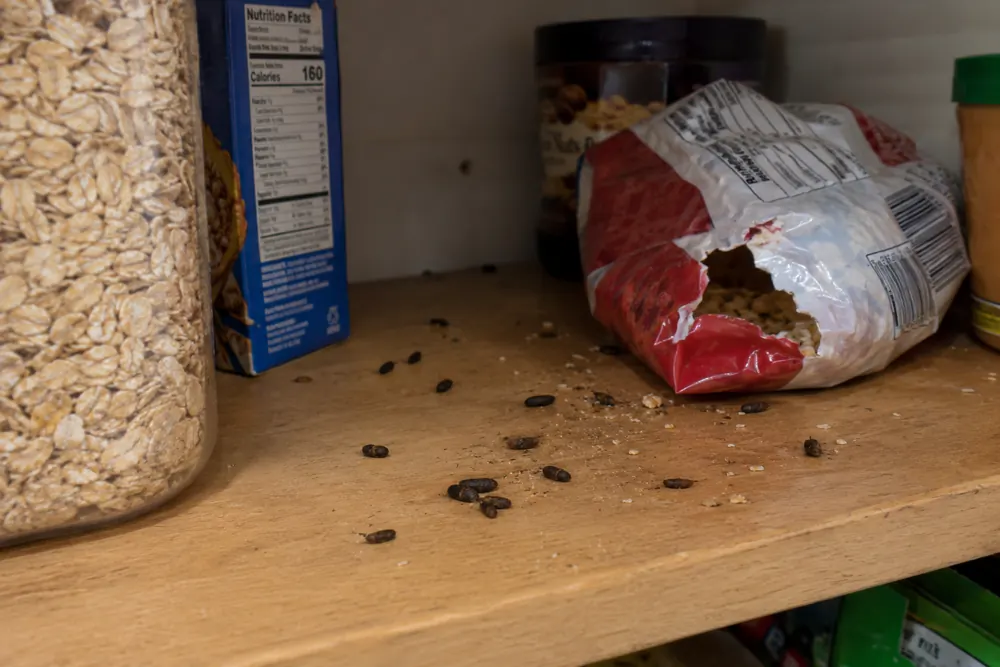
Wet-clean existing droppings so any new ones are easy to spot. Never sweep or vacuum them dry.
Check every day
Look at traps and the cleaned areas daily, and write down what you find.
Count quiet days, then keep going
Five days with no catches and no fresh signs is a good checkpoint. Many professionals keep monitoring for one to two weeks before calling a job finished.
Recheck when the weather turns
Look again after the first cold snap. If nothing appears, the sealing worked.
What to Do if the Mice Keep Coming Back
If you reach five quiet days and then catch another mouse, or find new droppings a few weeks later, the most likely explanation is an entry point that was missed. Common culprits in Durham homes include:
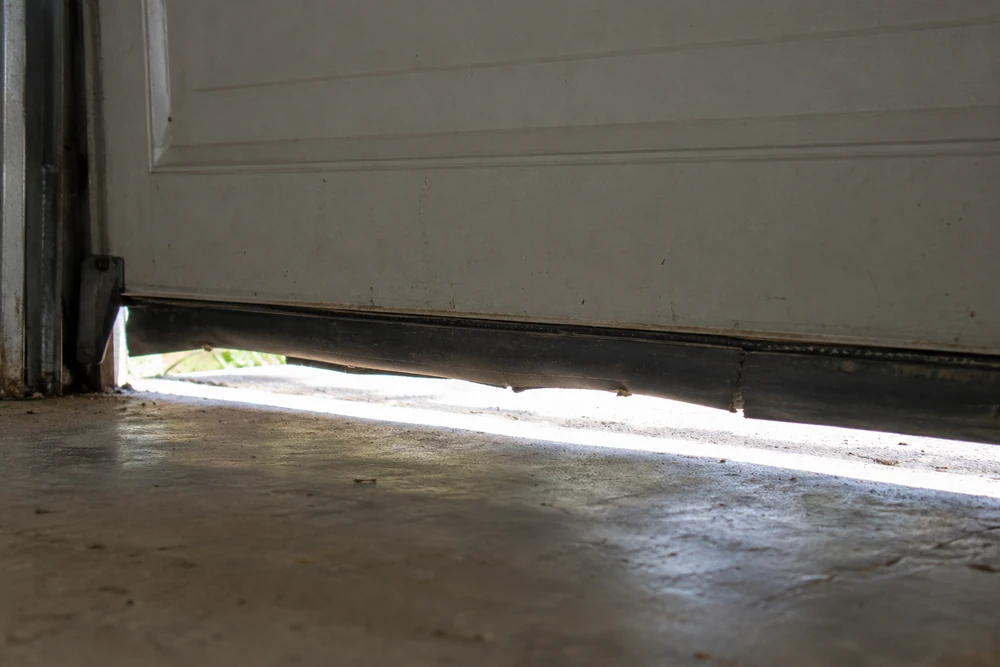
- The bottom corners of the garage door, where the seal does not reach the slab.
- Gaps where the AC line set or dryer vent goes through the wall.
- Weep holes in brick veneer on newer homes.
- Crawl space vents with rusted screens on older homes.
- Openings at the roofline, especially where trees touch the roof.
When the problem keeps returning, a full inspection by someone who checks the whole house, top to bottom, usually finds what was missed. See our page on mouse control in Durham for how that works.
Using the Mouse Rule During a Durham Fall
Timing matters here. In Durham, overnight lows usually start dipping into the 40s in October, and the first frost tends to arrive in late October or early November. Each cold front sends another group of mice looking for shelter, so mouse activity indoors often comes in waves rather than one steady stream.
That has two practical effects on the 5 day mouse rule. First, five quiet days in a warm stretch of early October are less meaningful than five quiet days in December, because the pressure from outside has not peaked yet. Second, if you finish trapping and sealing in September, the first cold snap is the real test: if nothing shows up in the garage or kitchen in the week after it, the work held.
The type of house matters too. Older homes in neighborhoods like Old West Durham, Walltown and East Durham often have many small gaps in siding, sills and crawl space vents, so a quiet week there is more convincing after a full sealing job than after a few patches. Newer homes in South Durham and around Southpoint usually have fewer, more predictable openings: the garage door, weep holes and utility lines. For the bigger picture of rodent problems across the city, see our main page on rodent control in Durham.
One Mouse Sighting: What Does It Mean?
Seeing a single mouse is often treated as proof of a large infestation. It is not proof, but it is a reason to look closer. Mice are nocturnal and cautious, so one seen in daylight can mean a crowded nest or food competition. One seen at night near the garage in October may be a newcomer that just found its way in.
The way to know is to check for droppings in kitchen cabinets, behind appliances, in the pantry and in the garage. A few droppings in one spot suggest a small, recent problem. Droppings in several rooms suggest an established one. Our signs of rodents guide covers how to tell.
The 5 Day Mouse Rule and Health Safety
While you are counting quiet days, handle cleanup carefully. Mouse droppings and urine can carry bacteria such as Salmonella, and mouse allergens are a known asthma trigger. Wear gloves, spray droppings with disinfectant or a bleach solution, let it soak for about five minutes, and wipe up with paper towels. The CDC’s guidance on cleaning up after rodents describes the full method, and our rodent cleanup page applies it to Durham homes.
5 Day Mouse Rule: Common Questions
Is the 5 day mouse rule real?
It is a rule of thumb, not a scientific standard. Five days without catches or new signs is a reasonable checkpoint after trapping, as long as entry points are sealed and traps are placed along mouse routes.
How many mice are there if I see one?
There is no fixed number. One mouse can be a lone newcomer or part of an established group. Droppings, noises and how many rooms show signs tell you far more than a single sighting.
How long does it take to get rid of mice?
For a typical house with sealing and good trap placement, most mouse problems are cleared in one to three weeks. Large or long-running infestations, or homes with many open gaps, can take longer.
Should I keep traps out after the mice are gone?
Many homeowners keep a couple of traps in the garage or behind the stove through the cold months as an early warning. Check them regularly.
Do mice leave on their own after a few days?
No. Mice that have found shelter and food stay. They may become less active in warm weather, but they do not leave a good nest voluntarily.
Related Articles
- Roof Rats vs Norway Rats: Which Rat Is in Your Durham Home?: how to tell the two rat species apart by tail, ears, droppings and nesting spots.
- Do Rodent Repellents Work?: what the evidence says about ultrasonic plug-ins, peppermint oil, soap bars and mothballs.
- How to Get Rid of Mice in Your House: an 8-step plan for trapping, sealing and cleaning up after mice.